

Poco Brawl Stars: Complete Guide, Best Build and Tips (2026)
Poco’s current build for Brawl Stars is Tuning Fork or Protective Tunes as your gadget depending on the matchup, Screeching Solo as your Star Power for Showdown and Knockout, and Shield plus Damage gears for most situations. He still leans hardest on Hot Zone and Gem Grab, where his healing Super and wide attack spread keep a grouped team alive through extended fights. This guide walks through who Poco is, his confirmed stats, his build, positioning, counters, and the gadget shift that’s currently reshaping how he’s played, checked against live pick-rate data rather than repeated from older guides.
Who Is Poco in Brawl Stars?
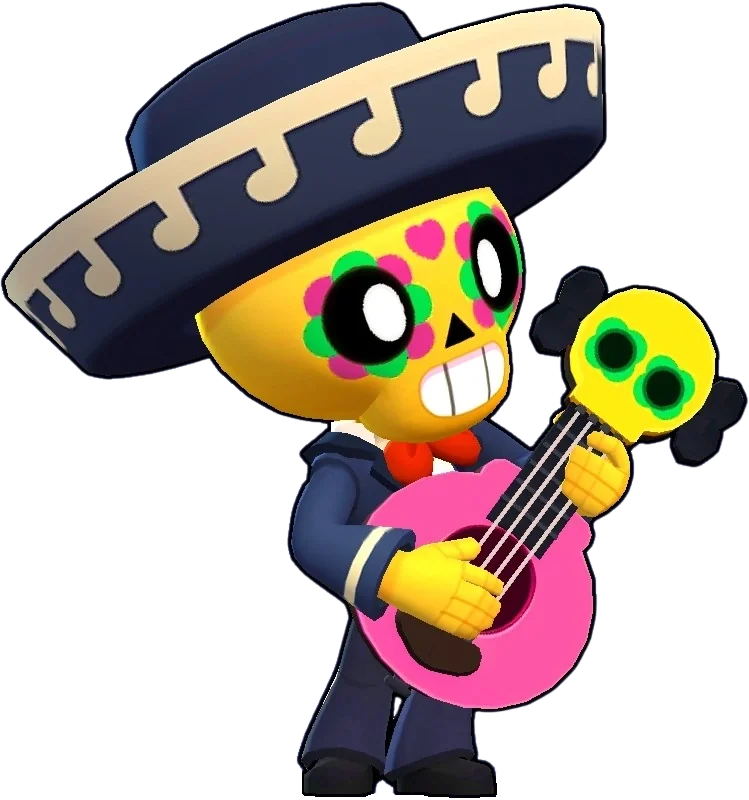
Poco is a Rare Support brawler created by Supercell for Brawl Stars. He is themed around music, playing a guitarrón, a large acoustic bass guitar with deep resonant tones, as his primary visual identity. His attacks are musical in nature, firing sound waves that spread in a wide arc and heal allies they pass through. His entire personality and kit reflect a cheerful mariachi musician whose melody keeps teammates alive while damaging enemies at the same time.
Poco was one of the original brawlers at launch and remains one of the most consistently played Support options in the game. His design has stayed popular in the Brawl Stars community because the music theme extends into his animations, sound effects, and skin designs, and the guitarrón gives him a culturally specific identity that’s rare among Brawl Stars characters. His long tenure in the game, rather than any single meta spike, is what keeps him in rotation across skill levels.
Poco’s Rarity and How to Unlock Him
Poco is a Rare rarity brawler, the lowest unlock tier above the starting brawler Shelly. That Rare status makes him one of the most accessible Support brawlers in the game, available early through the Starr Road progression system, and he can also appear in Starr Drops at any rarity tier. He was historically one of the first brawlers new players met through the old Box system, which is part of why his player base skews so wide across trophy levels.
Poco’s Abilities and Main Attack
Main Attack: Power Chord
Poco’s main attack is Power Chord. He strums his guitarrón, sending out a spread of sound waves that damage enemies and heal allies caught in the same path simultaneously. The wide arc covers multiple targets at once, which is what makes it effective in grouped team fights rather than in isolated duels. At max level (Power Level 11), the attack deals a confirmed 1,520 damage per hit, per Brawlify’s live combat stats.
The mechanic that separates experienced Poco players from beginners is that the sound waves continue past allies. Landing an attack through your frontline tank into grouped enemies behind them, while healing that tank on the way, is the core skill loop. The wide arc means you rarely need pinpoint aim, but lining up a shot that clips both your team and theirs takes map awareness that only comes with reps on a specific map.
Super Ability: Encore
Poco’s Super is called Encore. He plays an extended musical performance that heals all allies within range for 4,200 total health at max level, a figure confirmed directly against Brawlify’s combat stats. Unlike his basic attack, the Super also heals Poco himself, so it functions as both a repositioning tool and a sustain tool in the same use.
The Super charges through basic attack hits on enemies rather than through taking damage, which pushes Poco to play more aggressively than his health pool would otherwise suggest. He has to stay close enough to land hits on the enemy team while staying far enough back to survive if they turn on him. Managing that tension is the single biggest positioning skill gap between a Poco who wins fights and one who dies before his healing matters.
Poco’s Hypercharge
Poco’s Hypercharge does not change his Star Powers directly. It boosts the Super’s output and coverage for the duration of the Hypercharge window, which makes an already disruptive Encore harder for the enemy team to play around. It’s worth unlocking after your Star Power and gadget are maxed, but it shouldn’t be the first thing you save Star Points for.
Poco’s Confirmed Stats at Max Level
Health and Speed
At max level (Power Level 11), Poco has 8,000 health, confirmed against Brawlify’s live combat stats as of this update. His movement speed is 720 units per second, which sits in the average mobility band for Support brawlers. He isn’t fast enough to escape a committed assassin dive on raw movement alone, which is why positioning behind the frontline is a requirement rather than a suggestion. Shield Gear adds a 900-health regenerating shield on top of his base pool, which matters more for Poco than for tankier brawlers precisely because he can’t outrun a bad engagement.
Attack Damage and Healing
Poco’s attack deals 1,520 damage at max level, per Brawlify. Da Capo Star Power adds a heal to allies hit by that same attack, though the exact current per-hit figure needs reconfirming in-game before it’s republished, since older guides (including the previous version of this one) disagree with each other by a wide margin. His Super heals for 4,200 total health at max level, split across himself and nearby allies.
Tuning Fork heals for 800 health per second over 5 seconds, for 4,000 total, per noff.gg’s build data updated this month. Together these give Poco one of the higher total heal ceilings of any Support brawler, though the actual value in a match depends heavily on whether teammates hold their position in his arc.
What Is Poco’s Best Build in Brawl Stars Right Now?

Live gear-unlock data from Brawlify currently puts Shield Gear as Poco’s most-picked gear at 37% of unlocks, with Damage Gear close behind at 28.9%. Shield gives 900 health as a regenerating consumable shield, and Damage Gear adds 15% extra damage once Poco drops below 50% health. Health Gear (16.8%) and Gadget Cooldown Gear (11.1%) trail behind as situational picks rather than defaults.
For Star Power, the current split is close to even: Screeching Solo sits at 51% of unlocks against Da Capo’s 49%, and that gap is trending in Screeching Solo’s favor. Da Capo remains the better pick for team modes where allies hold position long enough to benefit from sustained attack healing. Screeching Solo is the pick for Showdown and Knockout, where the extra Super damage matters as much as the heal.
What’s changed: as of this update, Protective Tunes has overtaken Tuning Fork as Poco’s more-picked gadget, at 56% versus 44% of unlocks, and the gap widened by roughly 10,000 picks over the past week alone while Screeching Solo gained a similar amount over Da Capo. Older Poco guides, including the prior version of this page, still tell you Tuning Fork is the default. That’s no longer what the live pick data shows.
The likely driver is a shift toward stun-heavy team compositions in the current season, which makes the immunity on Protective Tunes worth more than the flat heal from Tuning Fork in a growing share of matchups. If you’re facing a team without meaningful crowd control, Tuning Fork’s healing is still the stronger raw output. If they’re running Frank, Buzz, or similar lockdown brawlers, Protective Tunes is now the wider-margin pick, not just the situational one.
Poco’s Gadget, Star Power, and Gear Choices
Gadget: Tuning Fork vs Protective Tunes
Tuning Fork heals Poco and nearby allies for 800 health per second over 5 seconds, and it’s still the stronger raw healing tool when the enemy team has no meaningful crowd control. Protective Tunes removes active negative effects from allies in a large area and grants brief immunity, and it’s the current default against stun-heavy compositions built around Frank, Buzz, or similar crowd-control brawlers. Given the current pick-rate shift toward Protective Tunes described above, it’s worth defaulting to it more often than older guides suggest, and saving Tuning Fork for matchups where you know you won’t be facing hard crowd control.
Star Power: Da Capo vs Screeching Solo
Da Capo heals allies whenever your basic attack hits them, which makes it the stronger pick for team modes such as Gem Grab, Hot Zone, and Brawl Ball, where teammates hold ground long enough to benefit from repeated attack healing. Screeching Solo adds 1,520 damage to Encore, turning your Super into a real damage source on top of its healing. That’s your pick for Knockout and Duo Showdown, where a kill from your Super can end a round outright.
Gear Combinations by Situation
Damage plus Shield is the most popular pairing overall and the safest default for ranked modes and head-to-head fights, since it covers both survivability and a damage floor. Damage plus Gadget Cooldown Gear trades some of that survivability for an extra Tuning Fork use per match, which matters in longer team fights where sustain gets used up early. Shield plus Health is the pick when you’re facing a heavy dive composition and expect to spend the match under pressure rather than dictating it.
Best Gear for Poco, Ranked
Looking at each Gear on its own rather than in a pairing, current unlock data from Brawlify ranks them like this:
- Shield, 37% of unlocks, the clear default and the pick that shows up in nearly every strong Poco build
- Damage, 28.9%, the standard second Gear, adding 15% extra damage below 50% health
- Health, 16.8%, a survivability alternative to Shield rather than a true second pick
- Gadget Cooldown, 11.1%, situational, worth it when you specifically need an extra Tuning Fork use per match
- Speed, 3.5%, niche, mostly for bush-heavy maps where the movement boost helps you land ambush attacks
- Vision, 2.7%, the least picked and useful mainly against enemies who live in bushes against you
If you only unlock two Gears on Poco, Shield and Damage cover the large majority of situations. Treat Health, Gadget Cooldown, Speed, and Vision as map- or matchup-specific swaps rather than core picks.
How to Play Poco: Positioning, Targets, and Timing

Positioning
Stay 6 to 7 tiles behind your tanks and use bushes to land attacks from an angle enemies aren’t expecting. Avoid the frontline entirely. At 720 speed and a health pool that can’t outlast a burst rotation, Poco is an easy target for any committed assassin who reaches him. Repositioning to high ground when the map allows it gives you better sightlines and lets your wide arc catch more targets at once.
The underlying principle is that Poco belongs at the back of every engage, not the middle of it. His arc is wide enough to reach enemies from behind your own frontline, and the healing passes through allies automatically as the wave travels. Playing him closer to the action doesn’t make him more effective, it just gets him killed before his healing has done anything.
Target Priority and Timing
Heal low-health allies near the objective before you bother healing anyone at full health. Double up attacks on grouped teammates during a team fight so one throw heals multiple allies at once. Time the Super for when your team is committing to an engage, not after the fight has already gone sideways, and hold it defensively when your own backline is under pressure from a dive.
Combo Strategy
Open with Tuning Fork to start the heal-over-time ticking before you commit to the Super, so the two overlap instead of firing back to back with a gap in coverage. That combination outlasts most burst-focused compositions in a prolonged fight. Interrupting an enemy healer such as Pam before she can out-heal your damage is usually worth more than one extra hit on a frontline tank.
Team Compositions and Synergies
Best Teammates for Poco
Poco performs best next to tanks and other high-health brawlers who can stay inside his attack arc long enough to actually benefit from it. Bull, Frank, and El Primo get the most value as frontline partners, since their large health pools mean each heal extends their effective time in a fight far more than it would for a squishier brawler. Max pairs unusually well with Poco in Gem Grab specifically, since her speed buff on top of Poco’s healing produces a gem carrier that’s genuinely difficult to pin down.
Organized teams get noticeably more out of Poco than solo queue does, simply because coordinated players hold position and stay inside his arc instead of scattering. That gap between coordinated and solo performance is wider for Poco than for most other Support brawlers, since so much of his value depends on teammates cooperating with his positioning rather than on anything he can do alone.
Doubling Up on Support Brawlers
Poco can stack with other healers in specific double-support compositions. Pairing him with Byron produces a healing core that’s hard to burst down in team modes, and it works especially well in Hot Zone, where sustained zone control matters more than fast eliminations. Avoid stacking two Supports in modes where elimination decides the round. Two healers without enough damage between them can keep a team alive without ever being able to close out a fight.
Poco’s Skins
How Many Skins Does Poco Have?
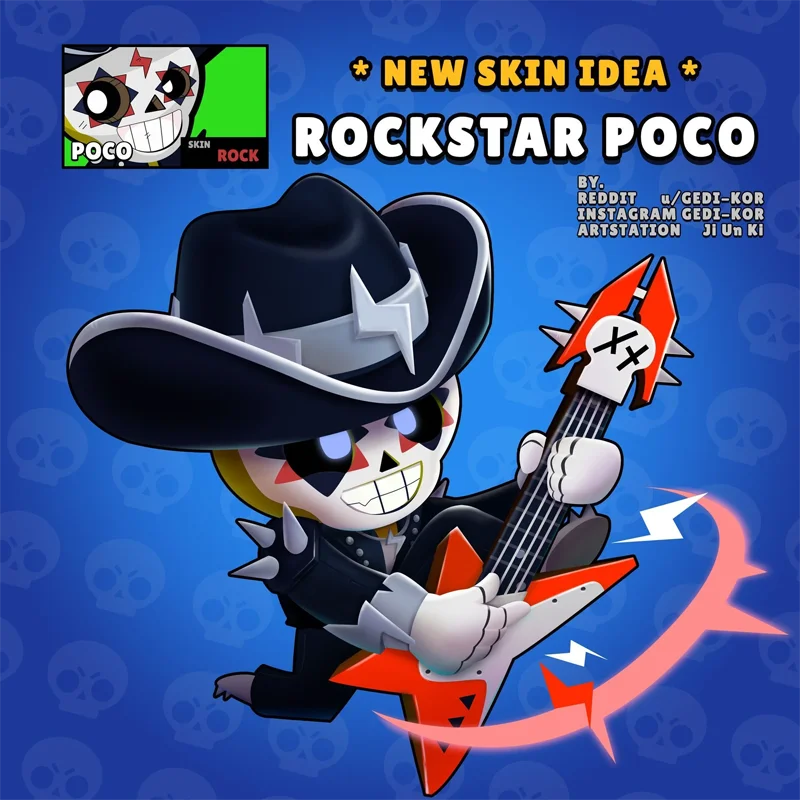
Poco has one of the larger skin collections among Rare brawlers, reflecting how long he’s been in the game and how well his design has held up. His catalogue spans seasonal event skins, Brawl Pass rewards, and direct gem purchases, most of which reinterpret the music theme through a different genre or persona while keeping the guitarrón as the core visual. None of them change his stats. Damage, health, and speed stay identical no matter which skin you have equipped.
Notable Poco Skins
Poco’s most recognizable skins keep the instrument-based visual language while reworking his mariachi identity into a different musical style, often with fully reanimated attack effects to match. For a look at the rarest cosmetics across the whole roster, including Poco’s more limited releases, see our rarest skins guide.
Strengths and Weaknesses

Strengths
- Wide attack arc hits multiple enemies and allies at once without requiring precise aim
- Da Capo provides passive healing through basic attacks with no gadget charge required
- Super heals himself and every nearby ally at once, one of the highest single-use heal values on any Support brawler
- Tuning Fork adds a further 4,000 healing over 5 seconds on top of everything else in his kit
- Rare rarity makes him accessible to players at any progression stage
- Consistently viable across several modes rather than narrowly specialized in one
Weaknesses
- 720 movement speed gives him limited escape options against a committed assassin dive
- His health pool, while solid at 8,000 max, still loses to burst compositions that ignore the frontline and dive the backline directly
- Healing drops off fast when teammates spread out instead of holding position in his arc
- Charging the Super means landing hits on enemies, which pulls him closer to danger than his kit otherwise wants
- Weak in solo modes, where there’s no one else to heal
- A situational draft pick rather than a universal first pick in ranked
How to Counter Poco
Hard Counters
Mina, Cordelius, and Tara give Poco the most trouble in competitive play. Burst assassins like Mortis and Edgar dive him before his healing has a chance to accumulate, cutting off his team’s sustain at the source. Both close distance faster than Poco can reposition, which makes them the priority threat to track in any matchup where they show up.
Playing Against Poco
The most reliable counter is killing Poco before his team-fight healing matters at all. His moderate health pool means a burst composition that ignores the frontline and dives straight to the backline can delete him quickly. Spreading your own team out also reduces how much value he gets from his wide arc, since he can only heal allies who are actually standing inside it. Forcing his opponents to spread denies Poco the grouped-ally situations his entire kit depends on.
Poco’s Strongest Modes and Maps

Poco’s healing utility peaks when teammates hold position or contest a zone rather than roaming independently, which is why his mode strength varies more by map design than by raw brawler power. Hot Zone remains his most consistently strong mode. Extended fights over a contested zone give both his Super and Tuning Fork time to matter, and grass-heavy maps let him land ambush attacks from cover. Gem Grab rewards the same mid-control playstyle, particularly on maps where the gem spawn sits in a chokepoint his wide arc can cover. Knockout suits Screeching Solo specifically, since a single well-placed Super can end a round outright once the enemy team is already low.
Duo Showdown and Brawl Ball are viable but more matchup-dependent than Hot Zone or Gem Grab, so treat them as secondary rather than automatic picks. Avoid Heist and Bounty, where individual damage output and objective pressure matter more than sustained healing, and Poco has little to offer either.
If you want exact current win rates by mode rather than this qualitative ranking, pull a live screenshot from Brawlify’s or Brawltime Ninja’s mode-specific stats before publishing. The decimal win-rate figures in the previous version of this article (46.6% Hot Zone, 62.5% Knockout, 76.3% Duo Showdown) had no source attached to them anywhere in the piece, and at least one live tracker currently ranks Poco in the bottom half of brawlers for both Knockout and Duo Showdown specifically, which contradicts that old claim directly.
Rather than repeat unverified numbers, this section now reflects the mode logic that’s consistent across independent sources, and leaves the exact percentages for the team to confirm and add back with a citation.
Is Poco Worth Using in Ranked and Pro Play?
Whether Poco is worth picking in ranked depends on the mode and map more than it does for most brawlers. He isn’t a universal pick. His value is tied closely enough to specific modes that he plays better as a situational draft pick than a default one. Hot Zone and Gem Grab give him his strongest footing, and grass-heavy maps amplify that further by letting him play from cover. In organized and pro play, teams increasingly slot him alongside a tank and a second support, where coordinated positioning lets his kit do what it can’t do in solo queue.
The honest read is that Poco rewards a team that already knows how to use him rather than rewarding the player who picks him blind. If the mode and matchup line up, he’s a strong pick. If they don’t, there’s usually a brawler better suited to the situation sitting right next to him in draft. Check our tier list for where he currently sits among Support options, our worst brawler guide for context on the bottom of the roster, and our best brawlers guide for how he compares to the top performers.
How Popular Is Poco Among Players?
Poco is one of the more recognizable brawlers in the roster, largely because of how long he’s been in the game and how distinct his mariachi design is next to the rest of the cast. New players tend to meet him early. His low unlock cost on Starr Road and his Rare rarity mean most accounts pick him up well before they reach the brawlers that require deeper progression, which is a large part of why his player base skews so much wider than his current competitive standing alone would suggest.
That accessibility cuts both ways. It’s why he has one of the more forgiving learning curves for a Support brawler, and also why a large share of the players piloting him haven’t yet learned the positioning discipline that makes him actually work. The gap between a Poco who plays 6 to 7 tiles behind the frontline and one who doesn’t is unusually large for how simple his kit looks on paper.
What Changed This Week
As of August 18, 2026, live unlock data from Brawlify shows Poco’s gadget preference moving fast: Tuning Fork unlocks fell by roughly 10,340 over the past 7 days while Protective Tunes gained almost exactly that amount, flipping the split from a Tuning Fork lead to a 56 to 44 Protective Tunes lead. Star Power picks moved the same direction on a smaller scale, with Screeching Solo gaining about 3,150 unlocks against Da Capo over the same week.
Both trends point the same way: more players are running into compositions where the anti-stun utility and Super damage are worth more than raw sustained healing. If that holds for another week or two it’s a real meta shift rather than noise, and it’s the reason the build recommendation above now leads with the gadget swap instead of repeating Tuning Fork as the default.
Frequently Asked Questions

How does Poco’s Super, Encore, work?
Encore heals all nearby allies and Poco himself for 4,200 total health at max level, confirmed against Brawlify’s live combat stats. It has a wide area of effect that covers most standard chokepoints, and it charges from basic attack hits on enemies rather than from taking damage.
Can Poco heal himself with his basic attack or his Super?
Not with the basic attack. Da Capo only heals allies that Poco’s attack passes through, not Poco himself. The Super does heal him along with nearby teammates, and so does the Tuning Fork gadget.
Is Tuning Fork or Protective Tunes the better gadget right now?
Protective Tunes has overtaken Tuning Fork in live pick-rate data, at 56% versus 44% of unlocks as of this update, largely because it counters the stun-heavy compositions common in the current season. Tuning Fork still heals for more in matchups with no meaningful crowd control, so the right pick depends on what you’re facing rather than on a single default.
What counters Poco most effectively?
Mina, Cordelius, and Tara give him the most trouble in competitive play. Burst assassins like Mortis and Edgar dive him before his healing accumulates, and any fast-closing brawler that reaches his backline before he can reposition is a real threat.
