
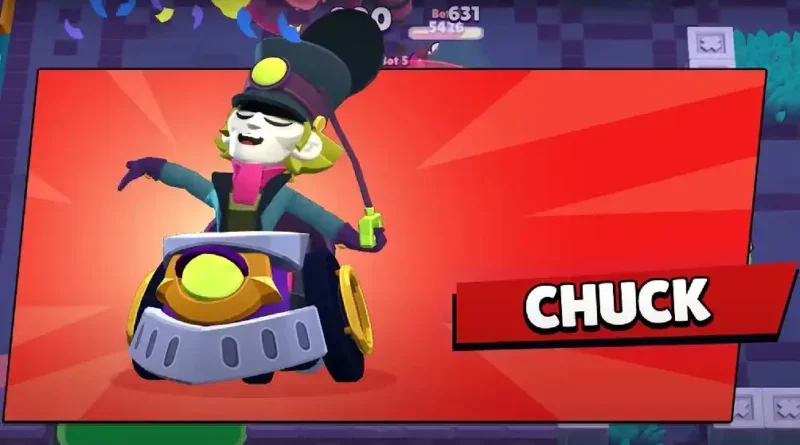
Chuck Brawl Stars: Complete Guide, Best Build & Tips (2026)
Quick answer: Chuck is a Mythic Brawler in Brawl Stars classified in-game as a Controller. His main attack, Steam Cloud, fires three steam clouds in a close-range cone for up to 1,080 total damage at max level. His Super, Train Posts, places up to three posts on the map (four with the Pit Stop star power) and lets Chuck dash between them, dealing damage and knocking back enemies; the Super charges passively over time rather than from landing hits.
Live unlock data from Brawlify puts his two star powers close to an even split: Tickets Please at 54%, which steals ammo on a dash-through, versus Pit Stop at 46%, which raises his post cap. Rerouting is the slightly more popular gadget, at 51% versus 49% for Ghost Train.
Who Is Chuck in Brawl Stars?
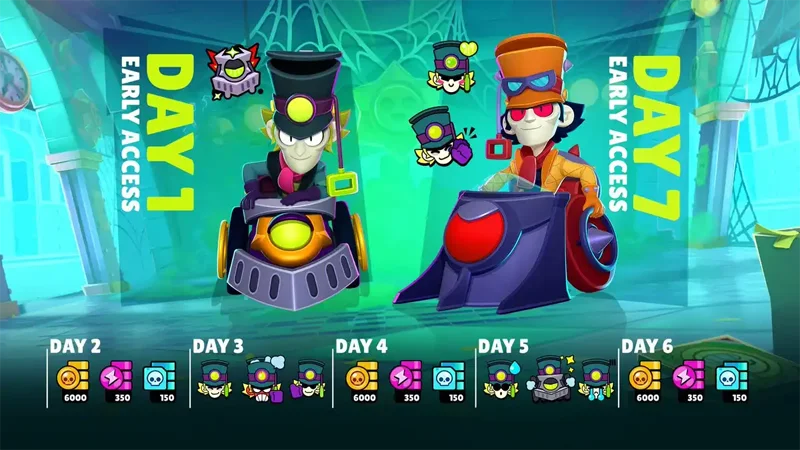
Chuck is a Mythic Brawler developed by Supercell for Brawl Stars, their multiplayer mobile arena game. He is themed around a train conductor character with a high-health frontline build, a passive Super charge mechanic, and a unique map-control system built around placing train posts across the battlefield.
Here’s a detail worth knowing before you draft him: Brawl Stars’ own class list files Chuck under Controller, the same broad category as Willow and Byron, but his kit doesn’t play like theirs. Willow and Byron control fights from a safe distance; Chuck’s 9,400 HP and close-range Steam Cloud put him on the frontline taking hits, which is a Tank’s job description more than a Controller’s.
The official label and the actual playstyle disagree, and that mismatch matters when you’re picking a draft: treat Chuck as a frontline brawler who happens to carry Controller-style map tools, not as a backline pick.
What makes Chuck genuinely distinct from other frontline Brawlers is the Train Posts Super system. Most high-HP Brawlers apply pressure through raw health and close-range damage alone. Chuck adds a spatial dimension: by placing posts across the map, he creates a movement network that lets him dash between positions instantly, deal damage along the dash path, and knock back anyone in the train’s way. A well-placed post network gives Chuck coverage over multiple map areas simultaneously in a way no other Brawler in the Brawl Stars roster can replicate.
His Super charges passively rather than off landing hits, filling in roughly five seconds with no other charge-boosting items. That consistency comes with a catch: Chuck starts every life, including after a respawn, at just 1% Super charge rather than a head start. (Supercell nerfed the starting charge down from 100% shortly after his 2023 release, and it’s stayed that way since.) Managing the post network, knowing where to place each new post, and timing the dashes for maximum damage and knockback is the skill ceiling that separates good Chuck players from great ones.
Chuck’s Base Stats (Max Power Level)
| Stat | Value |
|---|---|
| Rarity | Mythic |
| Class | Controller (plays like a frontline brawler, see above) |
| Health (HP) | 9,400 at Level 11 (max level) |
| Main attack | Steam Cloud: 1,080 total damage across 3 clouds, 6.7-tile range, close range |
| Reload / Ammo | 2.0 seconds, 3 ammo |
| Super | Train Posts: place posts, dash between them, damage + knockback |
| Super charge method | Passive, ~5 seconds to fill; starts each life at 1% charge |
| Movement speed | Normal (770) |
| Gadgets | Rerouting / Ghost Train |
| Star Powers | Tickets Please! / Pit Stop |
Stats sourced from Brawlify’s live brawler database and the Brawl Stars Wiki (Fandom), current as of Season 53. Supercell adjusts these numbers with seasonal balance patches, so check the in-game stats screen before finalizing a competitive build.
His 9,400 HP is the foundation of his frontline role. Unlike Assassins who need invisibility or mobility to survive close-range engagements, Chuck uses his health pool to absorb return fire while setting up his post network and landing Steam Cloud at close range. That HP total gives him more time to position and fire than most squishier picks in the Mythic tier before he’s at risk of elimination.
Steam Cloud: Chuck’s Main Attack Explained

Steam Cloud is Chuck’s primary attack. He fires three bursts of steam in a cone-shaped spread in front of him, dealing up to 1,080 total damage at max level when all three clouds connect. All three clouds must connect on a target to deal full damage, which requires Chuck to be at close range. At medium or long range, the steam cone spreads enough that a Brawler can be hit by only one or two clouds, significantly reducing the total damage of the activation.
Why Close Range Defines Chuck’s Attack Value
Chuck’s Steam Cloud is one of the higher close-range damage attacks in the Mythic rarity tier when all three clouds connect. The tradeoff is that reaching that close range requires navigating through opponents’ fire or using the Train Posts Super to dash into position. Players who try to use Steam Cloud as a medium-range poke tool consistently underperform because they are landing one cloud per activation rather than three. Position at contact distance before activating Steam Cloud and the damage output justifies the approach.
Reload and Timing
Steam Cloud runs on a 2.0-second reload with three ammo slots (per Brawlify), which is slower than most Mythic-tier attackers. During this reload window, Chuck’s main role is maintaining his post network, using the dash to reposition, and forcing opponents to deal with his high HP presence. Do not stand still waiting for Steam Cloud to reload: use the window for movement, post placement, or dash execution instead.
Train Posts: How Chuck’s Super Works

Train Posts is Chuck’s Super, and it works in two phases: placing posts, and dashing between them.
Phase 1: Placing Train Posts
Each Super activation places a Train Post at Chuck’s current position, provided he isn’t already within dash range of an existing post. Chuck can have up to three posts active at once by default, or four with the Pit Stop star power; placing a new post beyond that cap removes the oldest one automatically.
Posts aren’t destructible by enemy fire, but they aren’t permanent either: per the Brawl Stars Wiki, they stay on the map until a goal is scored in Brawl Ball or a round ends in Knockout or Duels, which is worth knowing when you’re planning a network for a longer match.
Phase 2: Dashing Between Posts
Once a post exists within roughly 6.7 tiles and in Chuck’s line of sight, activating the Super dashes him to it, dealing damage to enemies along the way. If another post sits within about 10 tiles of that one with nothing blocking the line, the dash chains automatically into it, and continues until Chuck runs out of reachable posts.
Chuck also gains a shield that cuts incoming damage by 50% for the duration of the dash, though he can still be stunned, slowed, or knocked back mid-dash. A full chain through several posts in sequence deals significant total damage and pushes enemies caught in the train’s path backward, often separating them from cover or teammates.
The Passive Super Charge
Chuck’s Super fills passively over roughly five seconds rather than requiring hits on enemies. This means he always has access to a new post placement at consistent intervals regardless of how the fight is going. The tradeoff, as noted above, is that he starts every life at only 1% charge, so the first 5-ish seconds of a life or a respawn are genuinely undefended. A Chuck who is being outplayed at close range still accumulates Super charge and can place posts strategically even when not winning direct exchanges.
Post Placement Strategy
- Place posts near objectives: a post near the Gem mine in Gem Grab or the goal in Brawl Ball lets Chuck dash to that position instantly from any other post within the roughly 10-tile chain range.
- Space posts near the edge of that chain range: posts placed too close together waste the network on a small area; posts spaced closer to the 10-tile chain limit stretch the network across more of the map per Super activation.
- Avoid placing posts behind walls without Ghost Train: the dash requires line of sight, so a post behind a wall is unreachable until Ghost Train is active.
- Use posts to cut off retreat routes: a post placed between an enemy and their base creates a damage line they must cross when retreating, converting an enemy retreat into an elimination opportunity when timed with a dash.
Best Gadget for Chuck: Rerouting vs Ghost Train

| Gadget | Effect | Best suited for |
|---|---|---|
| Rerouting | Removes the nearest Train Post and instantly recharges Chuck’s Super, allowing immediate placement of a new post | Dynamic maps where repositioning a post mid-match creates an advantage: Gem Grab, Hot Zone, and any mode where placement needs to adapt to a shifting fight |
| Ghost Train | The next Super dash passes through walls, letting Chuck reach posts on the other side of terrain | Wall-heavy maps, Heist, Siege: any situation where a wall-penetrating dash creates an angle opponents can’t anticipate |
Which Gadget to Run
Live unlock data from Brawlify has these two close to an even split: 51% of players run Rerouting versus 49% for Ghost Train, which tells you this is closer to a map-and-mode call than a clear-cut pick. Rerouting’s case is that removing a misplaced or suboptimal post and instantly recharging the Super turns a wasted placement into an immediate recovery; without it, a poorly placed post forces Chuck to either work around it or wait out the roughly five-second passive charge before he can reset his network.
Ghost Train’s case is narrower but sharper: on wall-heavy maps and in modes like Heist and Siege, a through-wall dash creates an angle opponents have no way to defend against without knowing exactly where Chuck’s posts sit. Default to Rerouting when you’re unsure of the map; switch to Ghost Train once you’ve confirmed the map has walls worth exploiting.
Best Star Power for Chuck: Pit Stop vs Tickets Please

Unlike the gadgets, Chuck’s two star powers solve different problems rather than variations on the same one, and live unlock data from Brawlify shows the playerbase is genuinely split on which matters more: 46% run Pit Stop, 54% run Tickets Please (7-day snapshot, Season 53).
- Pit Stop
- Raises Chuck’s maximum active Posts from three to four. It does not heal him. A common misconception (including in earlier versions of this guide) is that Pit Stop restores HP on a dash; per the Brawl Stars Wiki and Brawlify, its only effect is the extra post slot.
- Tickets Please!
- Steals 33% of an enemy’s remaining ammo whenever a Train Post dash passes through them, and refills a matching portion of Chuck’s own ammo bar in the process (it won’t overfill Chuck’s bar, and it doesn’t work against the Heist safe, the Siege IKE turret, or other spawnables).
Neither is an across-the-board winner. Pit Stop’s fourth post matters most in the same open, multi-lane modes where the whole post system already shines, Gem Grab and Hot Zone, where the extra slot extends how much of the map a single Super chain can cover.
Tickets Please earns its slightly higher adoption rate for a reason that’s easy to miss: Chuck’s own 2.0-second reload and 3-ammo pool are on the slow side for a Mythic brawler, and stealing ammo back on every dash-through is as much about keeping Chuck’s own Steam Cloud fed as it is about denying the enemy. It’s the better pick against reload-dependent opponents like Piper or Brock, and in Brawl Ball or Knockout where disrupting an enemy’s attack timing matters more than an extra post slot.
Chuck’s Hypercharge: Full Steam Ahead
At Power Level 11, Chuck unlocks a Hypercharge called Full Steam Ahead, per the Brawl Stars Wiki. Activating it gives his next Super unlimited dash range and turns the dash itself into a second damage source: while he’s moving, Chuck continuously fires two trails of piercing steam out to his sides, each with roughly 3.33 tiles of reach, dealing damage figures that have shifted between roughly 180 and 220 per patch as Supercell has tuned it. The practical effect is that a Hypercharged dash can cross the entire map in one activation and punish anyone standing near the dash line, not just the posts themselves.
Hypercharge fills like a second, slower Super meter charged through combat, separately from Chuck’s passive Super charge, so treat it as a match-defining cooldown rather than something to use on the first available post. Save it for a moment when a full-map dash chain is already lined up, since that’s when the unlimited range and the added steam damage compound rather than just closing a short gap you could’ve covered normally.
Chuck’s Best Build by Game Mode
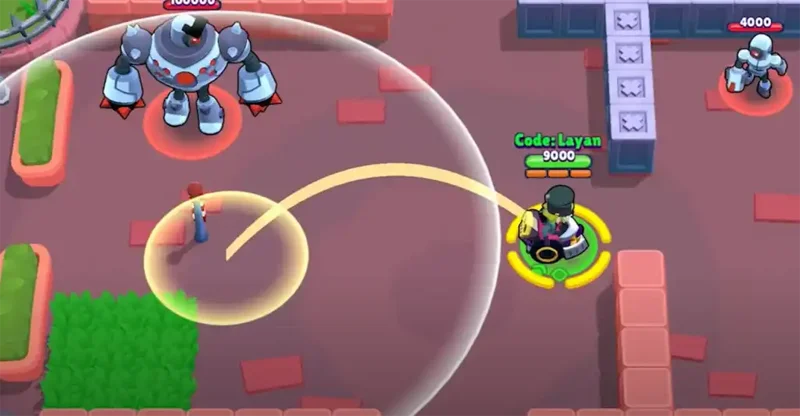
The gadget and star power breakdowns above cover the mechanics; this section pulls them into a specific loadout for each mode Chuck actually gets played in, since “best build” depends heavily on what you’re queuing into.
Gem Grab Build
Run Rerouting and Pit Stop. Gem Grab rewards holding one fixed area (the mine), so the extra post from Pit Stop extends how far your dash chain reaches around it, and Rerouting lets you correct a post placed on the wrong side of the mine without waiting out the passive charge.
Hot Zone Build
Run Rerouting and either star power. Hot Zone’s win condition is holding overlapping zone tiles, and a Chuck setup here is less about which star power and more about post geometry: place posts leading into the zone and along its perimeter so a single dash chain damages everyone standing inside it. Rerouting matters more than the star power choice because zone control shifts mid-match as the fight rotates.
Heist Build
Run Ghost Train and Tickets Please. This is Chuck’s most map-dependent build recommendation, since Ghost Train’s value depends entirely on the map having walls worth dashing through. On Hot Potato specifically, a Heist map where the safe sits at the end of a straight corridor, the Brawl Stars Wiki notes that Chuck can line posts up in a single row and threaten the whole approach with one dash, which is as close to a guaranteed-value setup as his kit gets.
Tickets Please pairs well here because stealing ammo from safe-side defenders on the way through both weakens their next push and refills Chuck’s own three-shot Steam Cloud. If you’re on the receiving end instead, the counter is the same one covered above: stay off the direct line between his posts and focus him before his network reaches its cap, since Heist’s narrower lanes make that corridor easier to identify than in open modes.
Brawl Ball Build
Run Ghost Train and Tickets Please. Enclosed Brawl Ball maps let Ghost Train’s wall-piercing dash reach a goalkeeper who thinks they’re covered, and stealing 33% of that goalkeeper’s ammo on the way through buys your team’s follow-up shot extra time before they can respond.
Best Synergies with Other Brawlers
Chuck’s frontline presence and knockback Super open specific synergy windows with Brawlers who can capitalize on displaced or disrupted enemies.
Long-Range Damage Dealers
Pairing Chuck with long-range Brawlers like Brock or Piper creates a consistent synergy loop. Chuck’s Steam Cloud and Train Post dash pushes enemies back, while the long-range teammate deals damage to the knocked-back targets who are now out of cover. Opponents are forced to deal with two different threat ranges simultaneously: Chuck at close range and the long-range Brawler punishing the knockback displacement.
Support Healers
Doug is Chuck’s strongest support partner. Doug’s Snack Attack heals Chuck while he holds a close-range position, and Doug’s Second Serving Super revives Chuck if an aggressive push results in an elimination. The combination of Chuck’s 9,400 HP pool and Doug’s external healing creates a frontline sustain loop that’s difficult for opponents to burn through cleanly, even without factoring in Chuck’s own star power choice.
Controllers and Area Denial
Willow pairs well with Chuck in Gem Grab and Brawl Ball. Willow’s Hex Super takes control of an opponent and can steer them into a Chuck Train Post dash path, combining crowd control with Chuck’s knockback damage in a coordinated two-ability sequence: Willow sets up the target, and Chuck’s available Super capitalizes on it.
Best Team Compositions with Chuck
Composition 1: Frontline Control (Gem Grab)
- Chuck: post network around the mine, close-range pressure on the gem carrier
- Doug: heals Chuck through frontline mine exchanges, Second Serving for gem carrier revival
- Colette: percentage damage against high-HP enemies contesting the mine from range
Composition 2: Disruption and Score (Brawl Ball)
- Chuck: knocks back defenders with the train dash, clears the goal approach
- Leon: invisible approach scorer who benefits from defenders being knocked away by Chuck’s dash
- Edgar: dive Assassin who finishes opponents displaced by Chuck’s knockback
Composition 3: Objective Siege (Hot Zone / Heist)
This one plays out a little differently from the two above because it’s built around one job rather than three separate ones: controlling a fixed point. Chuck lays a post network around the Hot Zone or the Heist safe and dashes through defenders for repeated knockback displacement, buying time for the objective to tick or for teammates to deal safe damage uncontested.
Brock punishes the displaced defenders from range and chips the safe or turret directly, while Hank acts as a second frontline body so Chuck isn’t the only thing absorbing damage while his post network resets.
Best Game Modes for Chuck in Brawl Stars
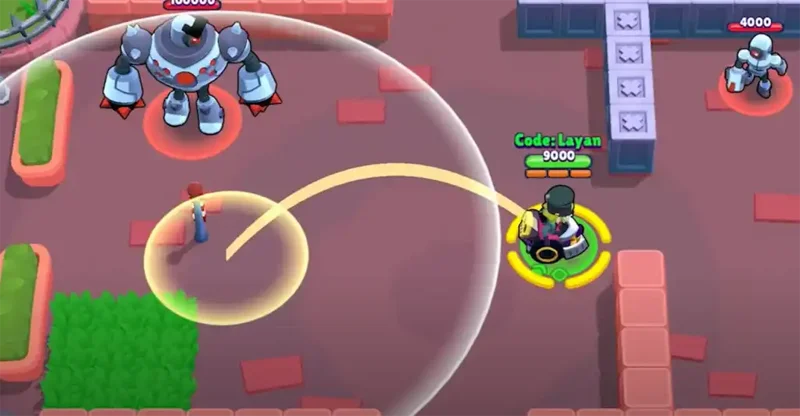
Gem Grab and Hot Zone: Excellent
These are Chuck’s two strongest 3v3 modes, and for the same underlying reason: both revolve around holding a fixed point, which is exactly what a post network is built for. In Gem Grab, posts placed around the gem mine create a damage-and-knockback zone that punishes anyone trying to contest it, and the passive Super charge means that zone keeps expanding without depending on kills.
In Hot Zone, posts placed leading into and around the zone perimeter deal damage to everyone who passes through them during a dash, making the zone expensive for opponents to walk into.
Heist: Strong
Multiple community tier-list trackers flag Heist specifically as the mode where Chuck overperforms his general standing; LDShop’s August 2026 tracker notes he ranks in Heist’s top five despite sitting only B-tier overall, and GamsGo’s tracker describes him as a “Heist specialist” for the same reason. In practice, Chuck’s passive Super charge produces a steady stream of post placements near the enemy safe, and dashing through its defenders clears the approach path for teammates while his HP absorbs the return fire.
Siege: Strong
Siege rewards Chuck’s ability to control both bolt collection areas and the approach to the IKE turret. Posts around bolt spawns tax opponents who try to contest collection, and during robot pushes, a dash through the defending team knocks them off the robot and disrupts coordinated damage against it.
Brawl Ball: Good
Chuck’s knockback dash removes defenders from the goal area, creating scoring windows for teammates. Tickets Please is particularly strong here since stealing 33% of a goalkeeper’s ammo during a dash-through reduces their ability to stop the follow-up scoring attempt. Enclosed maps that Ghost Train can penetrate raise his utility further.
Knockout and Showdown: Situational to Weak
Both single-life and solo formats reduce what Chuck brings to the table, just for different reasons. In Knockout, a well-timed train dash can still push an opponent off cover into a teammate’s fire for a permanent elimination, and dense post placement opportunities make some maps genuinely good for him, but his Normal movement speed is a real liability in a rotation-heavy format.
In Solo Showdown, the post network’s value drops without a team to coordinate with, and that same movement speed makes him easier to kite between Super cooldowns; his 9,400 HP keeps him alive but doesn’t replace the mode-specific synergies that make him strong in 3v3.
How to Counter Chuck in Brawl Stars

Brawlers That Counter Chuck
- Sirius: sustained long-range pressure forces Chuck out of his frontline position without letting him close the distance for Steam Cloud. His Normal movement speed makes repositioning under sustained fire difficult.
- Long-range Brawlers (Piper, Brock): Steam Cloud requires close range, so long-range Brawlers can deal full damage while staying completely outside Chuck’s 6.7-tile attack distance. His HP delays the inevitable but doesn’t resolve the range disadvantage.
- Colette: her percentage-based damage formula is particularly punishing against Chuck’s 9,400 HP. The higher his health, the more absolute damage each Taxing Shot deals, so his HP advantage actually amplifies her damage against him.
- Shield Brawlers: active or passive shield mechanics can absorb Chuck’s initial Steam Cloud burst and respond without being knocked significantly off position, neutralizing his close-range damage threat.
Counter Strategies
Since Chuck’s dash only deals damage along the direct line between posts, and each post has to stay within the roughly 10-tile chain and line-of-sight rules covered above, the single most reliable counter is simply knowing where his posts are and staying out of the corridor between them. From there:
Maintain distance and keep obstacles between you and Chuck
Chuck’s movement speed is Normal, not fast. A Brawler with mobility or long-range attacks that maintains the distance gap forces him to burn Ghost Train or Rerouting on repositioning instead of saving them for network management, which degrades his map control over the course of a fight.
Focus Chuck before his post network reaches its cap
Chuck’s effectiveness scales with how much time he’s had to build toward his three- or four-post cap. Early in a match, before that cap is reached, he’s a close-range brawler with no dash network to fall back on. Eliminating him before the network is established prevents the mid-to-late-game map control that makes him hard to deal with later.
Use area denial to block the dash path
Area-denial Brawlers like Barley or Willow can lay damage zones along the line between two of Chuck’s posts, making the dash path costly for Chuck rather than just for opponents. This forces him to either redirect the dash to a different post pair or absorb the area-denial damage mid-dash, cutting into the net value of the Super.
Chuck Skins and Customization in Brawl Stars

Chuck has six total skins including his default, per Brawlify’s current skin count. All skins are purely visual and don’t affect his stats, Steam Cloud damage, post placement range, or dash mechanics.
| Skin Name | Rarity | Availability |
|---|---|---|
| Conductor (default) | Default | Available on unlock |
| Inferno Chuck | Rare | Shop, Brawloween event |
| Desert Scorpion Chuck | Legendary | Shop, Sands of Time / Lantern event rotation |
| True Silver Chuck | Collectors | 10,000 Coins |
| True Gold Chuck | Collectors | 25,000 Coins |
| Electroid Chuck | Epic | Shop, Superheroes event rotation |
Skin availability rotates through Supercell’s seasonal event calendar and shop rotation, and pricing in gems shifts between events, so check the in-game Shop tab for what’s currently active rather than relying on a fixed price list. This table replaces an earlier, inaccurate skin list in this guide (see the claims audit for what changed and why); if you’ve seen “Boom Box Chuck” or “Holiday Chuck” referenced elsewhere, those names don’t match Chuck’s current in-game skin roster as of Season 53.
Chuck in Competitive Play and Trophy League
Tier-list trackers disagree more on Chuck than they do on most brawlers, which is itself worth flagging rather than smoothing over. As of August 2026, LDShop places him at B-tier overall, GamsGo describes him as sitting lower than that due to being a mode specialist, and noff.gg’s daily win-rate tracker briefly showed him with the single highest win rate in the game on one snapshot day, driven by a small, highly selective sample rather than broad play.
The one point these trackers do agree on is mode dependence: Chuck is a stronger pick in Heist specifically than his overall placement suggests, and weaker across the board in solo formats. Treat any single “Chuck is A-tier” or “Chuck is F-tier” claim you see elsewhere with that context, since it usually reflects one mode or one snapshot rather than his standing everywhere. For how he stacks up against the rest of the roster in one place, see our Brawl Stars tier list.
Recent Updates and Balance Changes
Supercell releases balance patches each season that can affect Chuck’s HP, Steam Cloud damage, the size of Pit Stop’s post-cap bonus, and Tickets Please’s ammo-steal percentage. These changes occasionally shift which star power or gadget is favored between seasons. Always check the official Brawl Stars update notes in the mobile app after each season update (Season 53 at the time of this guide) to verify current stats before committing to a build for ranked or event play.
Chuck Tips and Strategies for Every Skill Level
Beginner Tips
- Place the first post near the primary objective immediately. The first post each match should go near the gem mine, Hot Zone, or Heist safe depending on the mode, giving you an instant-dash option to the objective once a second post exists.
- Never fire Steam Cloud from outside close range. Medium-range Steam Cloud is nearly always a wasted activation: the cone spreads and most clouds miss or land at reduced damage. Close to the target first, then fire.
- Use Rerouting to fix early bad post placements. If an early post stops being useful as the match evolves, Rerouting removes it and immediately gives a new Super charge instead of making you wait out the roughly five-second passive charge.
- Track where your posts are at all times. The network is only useful if you remember where posts are placed. Before each Super activation, mentally note the nearest post and which direction a chained dash will travel.
Advanced Strategies
- Build toward a full-map dash chain. Advanced Chuck players space three or four posts (with Pit Stop) across the map at close to the 10-tile chain limit, so a single Super activation dashes through the whole chain in sequence, damaging and knocking back every Brawler in the path regardless of lane.
- Ghost Train the wall behind the safe in Heist. Placing a post behind the Heist safe and using Ghost Train to dash through the wall directly to it bypasses defenders entirely and lands the dash damage on anyone standing near the safe at that moment.
- Don’t confuse Pit Stop with sustain. Since Pit Stop only adds a fourth post and doesn’t heal, don’t plan your positioning around expecting HP recovery from a dash. If you need sustain, that’s an argument for Doug as a teammate, not for a specific star power choice.
- Coordinate the Brawl Ball train dash with teammate positioning. Before dashing through a goalkeeper’s post, confirm your teammate is ready to immediately follow up. The knockback only lasts a moment before the goalkeeper recovers, and the scoring attempt needs to land inside that window.
More Mythic Brawler Guides
- Willow Brawl Stars: Complete Guide
- Doug Brawl Stars: Complete Guide
- Colette Brawl Stars: Complete Guide
- Edgar Brawl Stars: Complete Guide
- Leon Brawl Stars: Complete Guide
- Hank Brawl Stars: Complete Guide
Frequently Asked Questions About Chuck in Brawl Stars
Who is Chuck in Brawl Stars?
Chuck is a Mythic Brawler developed by Supercell, classified in-game as a Controller despite playing more like a frontline brawler thanks to his 9,400 HP. His main attack, Steam Cloud, fires three steam bursts in a close-range cone for up to 1,080 total damage. His Super, Train Posts, places posts on the map and lets him dash between them for damage and knockback, charging passively over roughly five seconds rather than off landing hits.
What does Chuck’s Pit Stop star power actually do?
It raises Chuck’s maximum active Posts from three to four. It does not heal him on a dash, a mix-up that shows up in older guides (including earlier versions of this one). Its value is entirely about extending how much of the map his post network and dash chain can cover in a single Super.
What is the best gadget for Chuck?
Live adoption data splits close to evenly: 51% of players run Rerouting, 49% run Ghost Train. Rerouting removes a poorly placed post and instantly refunds the Super, which is the safer default on an unfamiliar map. Ghost Train, which lets one dash pass through walls, is the sharper pick once you’ve confirmed a map has walls worth exploiting, especially in Heist and Siege.
What game modes is Chuck best in?
Gem Grab and Hot Zone are his strongest modes because both revolve around holding a fixed area, which his post network is built for. He’s also strong in Heist specifically, where several tier trackers flag him as overperforming his general standing, solid in Siege and Brawl Ball, and weaker in Knockout and Solo Showdown.
How do I unlock Chuck in Brawl Stars?
Chuck is a Mythic Brawler available through the Starr Road progression system, Brawl Pass season rewards, seasonal events, and direct purchase from the in-game shop when available. Check the current Brawl Pass tiers and shop rotation for availability in the active season.
Who counters Chuck in Brawl Stars?
Sirius and long-range Brawlers like Piper and Brock counter him by staying outside his 6.7-tile Steam Cloud range. Colette’s percentage-based damage is uniquely punishing against his high HP, and shield Brawlers can absorb his close-range burst without being displaced. The core counter strategy is learning his post lines, avoiding the dash corridor between them, and pressuring him before his network reaches its post cap.
What skins does Chuck have?
Six total, including the default Conductor skin: Inferno Chuck (Rare), Desert Scorpion Chuck (Legendary), True Silver Chuck and True Gold Chuck (Collectors), and Electroid Chuck (Epic), per Brawlify’s current skin list. Availability rotates through the Shop and seasonal events.
How does Chuck compare to other Mythic Brawlers?
Among Mythic Brawlers, Chuck is the only one with a passive Super charge tied to a persistent map-object system. Willow is a Mythic Controller with crowd-control mechanics that actually plays the Controller role at range. Doug is a Mythic Support with the unique revival Super. See the complete Brawl Stars characters guide for full tier comparisons.
