
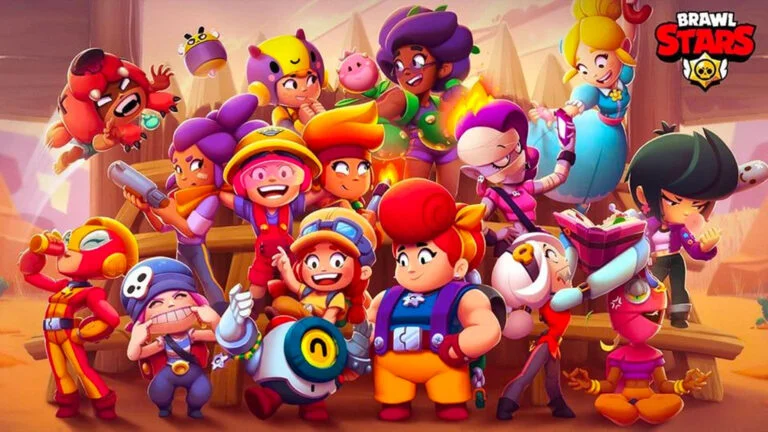
What Are the New Game Modes in Brawl Stars in 2026?
New game modes in Brawl Stars reshape how matches play out each season, and knowing the mechanics before you queue up saves you from getting embarrassed in your placement matches. This guide breaks down every current permanent mode, which brawlers and maps suit each one, how the reward tracks connect back to trophy progression, and where the current ranked pool actually rewards mode flexibility over specializing in just one.
We update this page as Supercell rotates content into the permanent lineup; if a mode you’re looking for isn’t listed below, it’s most likely running as a limited-time event rather than a permanent fixture. Check the in-game calendar to confirm before assuming it’s gone for good.
Key Takeaways
A few things matter more than the rest once you’re actually in a match:
- The six permanent modes below split roughly into team-objective formats (Heist, Hot Zone, Siege) and elimination-or-survival formats (Duo Showdown, Knockout, Bounty). The two groups reward almost opposite playstyles.
- Trophy progression, gems, coins, and Starr Drops all route through the same reward system regardless of which mode you play, so mode choice is a strategy decision, not a progression penalty.
- Ranked mode rotates its pool each season, and Knockout, Hot Zone, and Bounty show up in that rotation more often than the others. A five-brawler pool built across those three formats pays off longer than mastering just one.
Overview of Brawl Stars Game Modes in 2026
Brawl Stars runs on a rotating event system: some modes are permanent fixtures on the mode select screen, while others cycle in and out as limited-time events tied to the current season. That distinction matters for progression, since trophy road rewards and ranked-mode eligibility depend on whether a mode counts as part of the permanent lineup or is running as a temporary event. For a full breakdown of every mode currently in the rotation, the mode select screen is the fastest way to see what’s live right now.
The six current game modes covered in this guide are the permanent core as of our last full review of the mode select screen. Supercell typically layers additional limited-time modes on top of this core throughout a season, tied to esports events or seasonal themes. Those come and go faster than any guide can stay current for, so treat the in-game event calendar as the source of truth for anything running this week that isn’t listed below.
Each arena map within a mode is built to favor specific brawler archetypes, which is why map awareness matters as much as brawler selection once you’re past the first few weeks of learning the mode itself.
How to Change Your Game Mode in Brawl Stars
From the main lobby, each event slot on the mode select screen already shows a specific mode and map, tapping a slot drops you straight into matchmaking for whatever is running there. You aren’t choosing a mode freely from a menu the way you’d pick a difficulty setting; the game decides what’s live in each slot, and slots rotate on their own schedule throughout the day and across the season.
If the mode you want isn’t currently occupying a slot, a Friendly Battle is the one place you can hand-pick any mode and map directly, regardless of what’s active in the public rotation. That’s the practical answer for players trying to practice a specific format, Heist strategy with a full squad, for example: without waiting for it to cycle back into the regular lineup.
Ranked mode works differently again: it draws from a fixed seasonal pool rather than the day-to-day event rotation, so a mode can be live in Friendly Battles or the main rotation without necessarily being part of the current ranked pool, and vice versa.
The Core Game Modes Explained
Duo Showdown
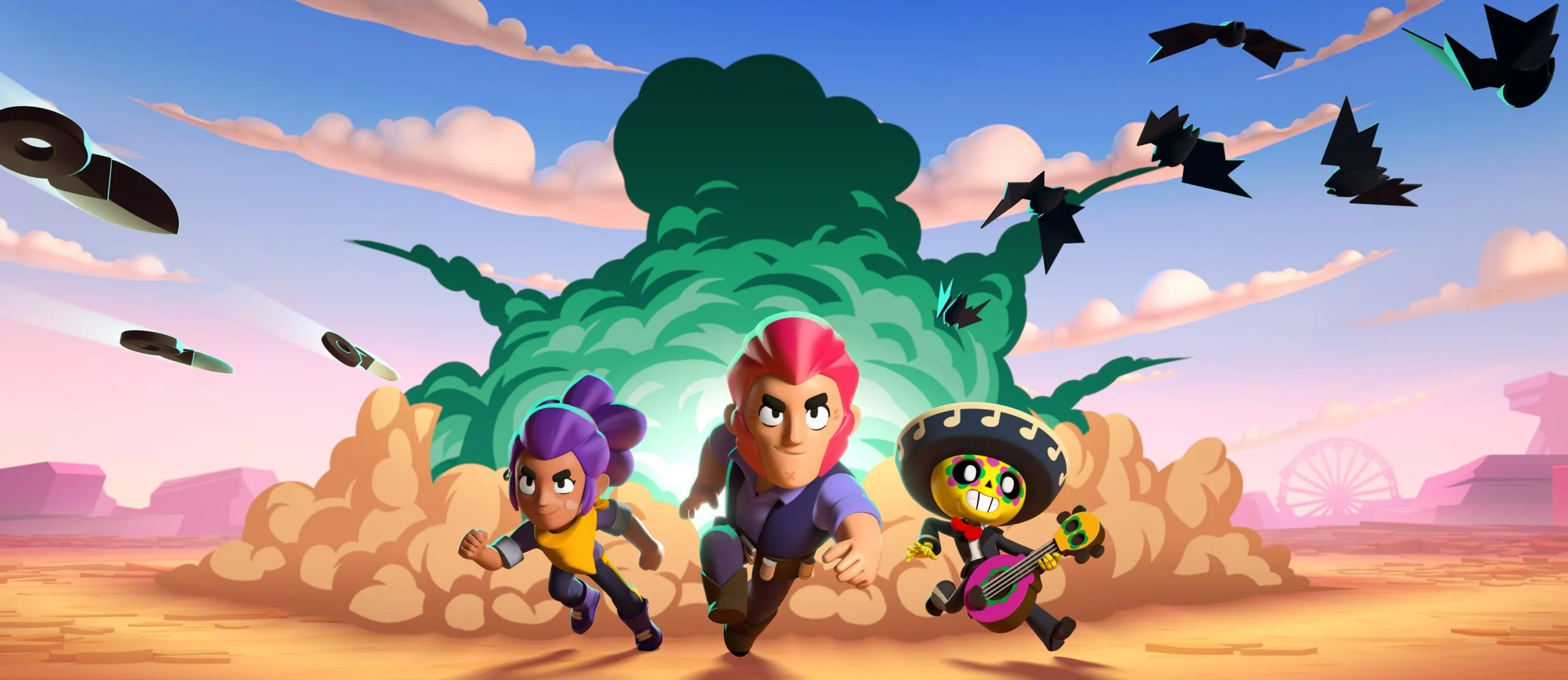
Duo Showdown pairs you with one teammate against nine other duos in a shrinking arena, and the last team standing wins. The shrink is what separates it from solo Showdown: instead of managing your own survival in isolation, you’re managing two health pools, two power-up inventories, and a positioning decision that has to account for where your partner actually is, not just where you’d go alone.
The duos that get eliminated first are rarely the ones playing too aggressively. More often it’s the ones who split up to grab separate crates as the ring closes, then get caught rotating back toward each other under fire. Sharing power-ups only works if you’re actually close enough to share them.
Brawlers with high health and self-sustain like Frank, Rosa, and El Primo hold up well into the late-game squeeze because their health pools survive the chip damage that piles up once the arena forces everyone into the same few tiles.
Pairing one of them with a ranged damage dealer gives you a duo that can both absorb the crossfire and finish opponents your tank pins down. Maps with heavy bush coverage reward ambush setups; open arenas favor duos that can poke from range and avoid the final-circle brawl entirely.
Knockout
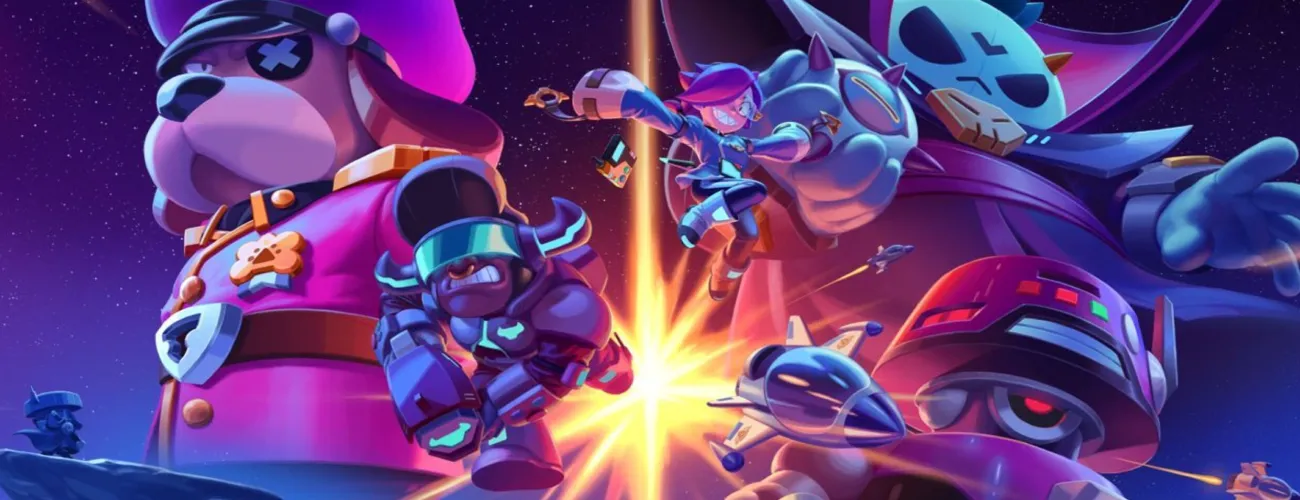
Knockout strips away respawns: each of the three players on a team gets one life per round, first team to eliminate all three opponents takes the round, and the match goes to whichever team wins the most rounds. Removing respawns is a small rule change with an outsized effect. A single bad engagement in round one can cost your team the round outright, so positioning decisions carry more weight here than in almost any other permanent mode.
It also means small mechanical edges compound. A player who’s slightly better at kiting or landing long-range shots pulls further ahead here than they would in a mode with retries built in, since there’s no second life to erase the mistake.
High damage brawlers with reliable range like Brock, Colt, and Piper are consistent picks because their range lets them start fights on favorable terms rather than reacting to someone else’s. Since there’s no coming back from a mistake mid-round, survivability matters more than raw burst damage, assassins like Leon can work, but only when you’re confident enough in the engagement to commit, since a missed opener with no backup plan just ends your round early.
Maps with clear lanes and defined choke points reward players who identify which positions expose them to crossfire before they walk into it, not after.
Heist
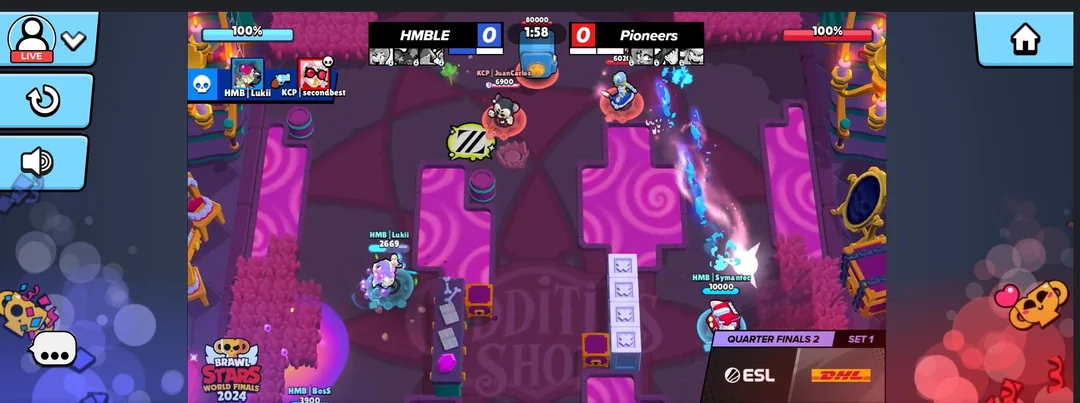
Heist puts a safe on each side of the map, and both teams race to break the enemy’s open while defending their own, whichever safe has taken more damage when time runs out, or gets destroyed outright, decides the match. What sets Heist apart from the other objective modes is that offense and defense aren’t sequential, they’re simultaneous: every second spent pushing is a second your own safe isn’t being watched.
Darryl, Bull, and Bibi get picked here more than most because their damage output is built for close-range bursts against a stationary target, which is exactly what a safe is. The stronger compositions pair one of them with a support or zone-control brawler who can hold the approach lanes open, rather than sending two safe-crackers down the same path and hoping the enemy team doesn’t do the same.
On maps with open lanes to the enemy base, aggressive early rushes tend to win; on maps with heavier wall coverage, the match usually comes down to whoever controls the choke points around both safes by the midgame, not whoever rushed first.
Hot Zone

Hot Zone puts one, two, or three control points on the map, and your team scores continuously for every second a teammate stands inside one, first team to the score target wins. Multi-zone maps are the more interesting version of this mode, because they force a rotation decision roughly every thirty seconds: hold what you have, or split off to contest a zone the enemy is leaving thin.
Map layout decides more of the strategy here than brawler picks do. On multi-zone maps, the easiest zone to hold is rarely the most central one, it’s whichever zone has the fewest open sightlines into it, since that’s the one a lone defender can hold against a two-brawler push. Identify that zone early and you’ve effectively banked a resource advantage before the fighting even starts.
Once you know which zones you’re fighting for, Penny, Barley, and Sprout are the brawlers that make holding them miserable for the other team, their damage lingers in the area after they’ve moved on, which punishes anyone trying to walk back in. A tank that can eat damage while standing in the zone gives your team a body to hold ground while the rest of the team rotates.
Siege Mode

Siege replaces direct objective damage with an economy: both teams collect Bolts spawning in the center of the map and spend them to summon a Siege Robot that marches toward the enemy base. Whichever robot lands more damage on the enemy base wins the match. Bolts compound, a team that banks a small early lead in bolt collection ends up fielding a stronger robot, which then makes it harder for the other team to contest the center and catch up.
That compounding is the main thing separating Siege from Heist, even though both are 3v3 base-attack formats. Heist is closer to a binary race: whoever’s safe survives longer wins, full stop. Siege has a snowball built into it, which means a team that falls behind early in bolt count is fighting an uphill battle even if they win every individual gunfight afterward. Chasing kills instead of the bolt spawn is the single most common way teams lose a Siege match they were otherwise even in.
Jessie, Nita, and 8-Bit cover the three roles a Siege team actually needs: someone mobile enough to contest bolts, someone who can anchor the base defensively, and someone who can win a straight fight for center control. Maps are symmetrical, with bolts spawning dead center and both bases at opposite ends, so the choke points between center and your own base determine how much of the enemy robot’s damage you can intercept before it reaches your walls.
Bounty

Bounty assigns every player a star value that climbs with each kill, teams bank stars by eliminating opponents, and whoever has the most stars when time runs out wins. The tension built into the mode is real: killing a high-star opponent is worth more, but losing your own high-star player hands the other team a proportionally bigger swing in the other direction.
That risk-reward math changes how you should play as a match goes on, protecting your team’s highest-star player becomes more valuable than adding another kill once someone on your side is a few stars ahead, since losing them costs more than a fresh kill gains.
Brock, Piper, and Crow are the standard picks because long range lets them bank stars from positions that are genuinely hard to punish; a Bounty match against a team running two long-range brawlers usually comes down to whichever side controls more open sightlines on the map, since that’s what decides who gets to fight on their own terms.
How Map Rotation Works Across Game Modes
Every permanent mode draws its matches from a pool of arenas rather than a single fixed map, and that pool rotates on its own timer, typically every few hours, though the exact window has shifted over past seasons, so treat “a few hours” as a guideline rather than a fixed rule.
What actually changes between rotations is the arena layout, not the mode’s objective: a Hot Zone match an hour from now still scores the same way, but it might hand you a single-zone map instead of a three-zone one, which changes which brawlers are worth picking.
Checking which map is live before you lock in a brawler is worth the five seconds it takes, especially in modes where map layout swings the matchup hard, Duo Showdown’s bush-heavy arenas versus its open ones are close to two different games, and the same is true of Siege’s choke-point layouts.
The mode-specific notes earlier in this guide cover what to look for on each map type; the rotation itself is just the mechanism that decides which one you’ll actually get.
Rewards and Unlockables Across Game Modes
Every mode feeds the same trophy system tied to your account. Wins push your brawlers up the trophy road, and trophy road milestones are what actually unlock gems, coins, power points, and Starr Drops, the mode you played to get there doesn’t change what you unlock, just how fast you got there.
Limited-time event modes are the exception: they usually run their own separate reward track with cosmetics and skins that aren’t available through the regular shop or Brawl Pass at all. Those tracks disappear when the event ends, which is the real reason to prioritize an event mode in its first week rather than waiting, not because the mode gets harder to earn rewards in later, but because the reward track stops existing.
Seasonal updates that add new modes typically bundle in an introductory challenge with a flat gem payout for completion, effectively free progression toward whatever you’re saving gems for, whether that’s the Brawl Pass or a specific brawler upgrade.
Impact on Competitive Play and Ranked Modes
Ranked rotates its available modes every season, so a player who’s only built one brawler pool is at a real disadvantage the moment their mode drops out of rotation. Knockout, Hot Zone, and Bounty show up in the ranked pool more consistently than the others, which makes them the three worth prioritizing if you’re building toward a season of climbing rather than one good run.
The pool-size question comes up a lot, and the honest answer is that three to five upgraded brawlers spanning different mode types covers most of what a season’s rotation throws at you. Fewer than that and you’re stuck picking a suboptimal brawler for whatever mode is live; more than that and upgrade resources get spread thin enough that none of your picks are actually strong.
A brawler that dominates Bounty’s open sightlines can be a liability in Hot Zone’s tighter zone fights, so the pool needs range diversity, not just five strong individual picks. Hypercharges add another layer to this decision once they’re unlocked, since a Hypercharged pick can swing a close match on its own, worth prioritizing on whichever brawler already anchors your strongest mode rather than spreading the upgrade thin.
New modes shift this calculus temporarily: when something new enters the ranked pool, the players who figure out strong picks in the first week are working with less information than everyone eventually will have, but they’re also the ones banking trophy gains before the wider playerbase settles on the same two or three “correct” answers.
Limited-Time Event Modes
On top of the six permanent modes, Brawl Stars regularly runs limited-time events tied to seasonal themes, esports tie-ins, and major update launches. These run for a fixed window and then disappear, some return in later seasons, some don’t come back at all.
Limited-time modes are also where Supercell tends to test mechanics that never make it into the permanent rotation: asymmetric team sizes, modified arena rules, power-ups that don’t exist anywhere else. That’s part of why they’re worth playing even outside the rewards, some of the more interesting design choices in the game only ever show up in a two-week event window.
The in-game calendar is the only reliable way to track what’s currently running, since event schedules shift season to season and aren’t fixed to a predictable date.
Tips for Mastering New Game Modes Quickly
Learn the objective before you learn the brawler
Every mode except Knockout has an objective that scores faster than kills do, and the fastest way to lose in an unfamiliar mode is treating it like a deathmatch because that’s the instinct every other mode trains into you. Before your first match in a mode you don’t know, check what actually wins it, zone control time, safe damage, bolt count, star total, and pick a brawler that supports that objective, not just whichever brawler you’re most comfortable with mechanically.
A brawler that dominates Heist’s close-range safe rushes will get outranged and lose every fight on an open Bounty map, so map layout and mode objective both factor into the pick before a match starts, not after it’s already going badly.
Communicate, and track the calendar
In every 3v3 mode, calling out position, flagging a dangerous opponent, or signaling a retreat through quick-chat changes outcomes more than most players give it credit for, the teams that win consistently aren’t always the most mechanically skilled ones, they’re the ones sharing information their teammates can actually act on.
The same discipline applies to the event calendar: new modes carry their best rewards during the launch week, while introductory challenges are still active, and those rewards are frequently unavailable through any other channel once the window closes. Checking the calendar at the start of a season and planning around it is a five-minute habit that pays off more consistently than most in-match adjustments do.
Frequently Asked Questions
What are the new game modes in Brawl Stars?
The six modes covered in this guide: Duo Showdown, Knockout, Heist, Hot Zone, Siege, and Bounty currently make up the permanent mode lineup. Anything not listed here is most likely running as a limited-time event layered on top of that core lineup; Supercell announces permanent additions through official channels before they go live.
Are new game modes permanent or seasonal?
Both happen. Some additions become permanent fixtures on the mode select screen, while others run for a fixed event window and then disappear, sometimes returning in a later season and sometimes not. The in-game calendar is the only reliable way to confirm which category a specific mode falls into at any given time.
What rewards can I earn from new game modes?
All modes feed the same trophy road, which is what actually unlocks gems, coins, and Starr Drops, the mode doesn’t change the reward, just the pace. Limited-time modes are the exception, since they typically run a separate challenge track with exclusive skins and cosmetics that disappear once the event window closes.
Which brawlers are best for new game modes?
It depends on the objective, not the mode’s name. Tanks and area-denial brawlers hold up in Hot Zone and Siege; long-range brawlers dominate Bounty and Knockout; burst-damage brawlers that can pressure a fixed target are the priority in Heist. Match the brawler to what actually wins the mode, then adjust for the specific map.
Can I play new game modes solo, or do I need friends?
Most 3v3 modes work fine solo through standard matchmaking, which pairs you with random teammates. Duo Showdown needs exactly one partner, friend or randomly matched. A handful of special event modes introduce formats that work better with a pre-formed team, but that’s the exception, not the rule.
How often does Brawl Stars add new game modes?
Permanent mode additions are tied to major seasonal updates, which happen a few times a year. Limited-time event modes show up far more often, usually tied to holidays, esports tie-ins, or shorter seasonal themes. The in-game calendar and official Supercell channels are the two places that stay current on both.
