
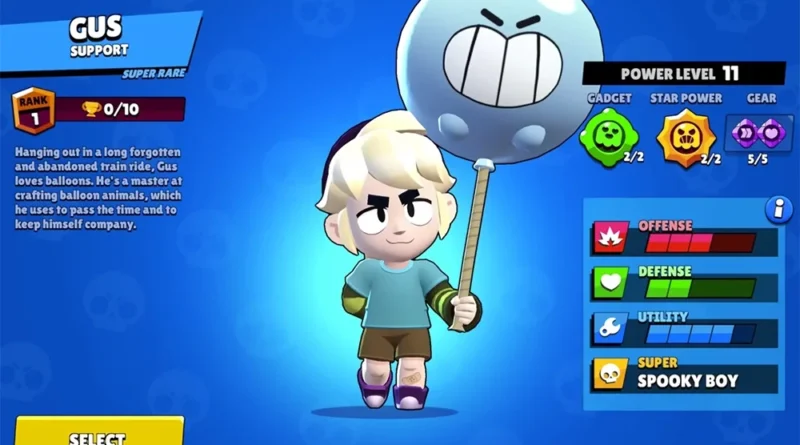
Gus Brawl Stars: Complete Guide, Best Build and Tips (2026)
Gus is a versatile support brawler who heals, shields, and pressures enemies at the same time. Pull up any current build tracker and the top-picked 2026 loadout is consistent: Kooky Popper as the gadget, Spirit Animal as the Star Power, and a Damage plus Shield gear combo.
He’s strongest in objective-heavy modes, especially Gem Grab and Bounty, where his mid-lane control and healing chain matter most. Below is what the live build trackers, patch notes, and hands-on play actually say about him, not just what a generic “best build” template would guess.
Gus at a Glance
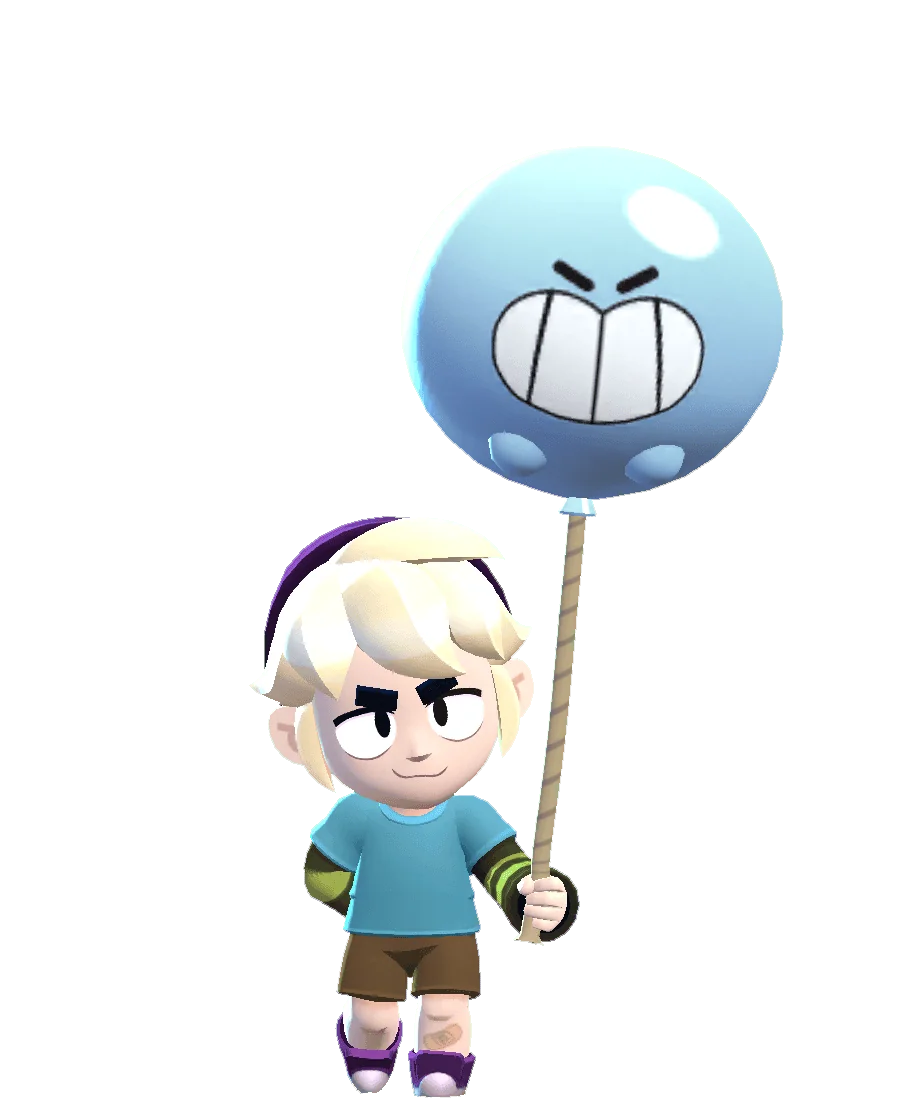
Before the full breakdown, here’s the short version. Gus’s most-picked 2026 build pairs the Kooky Popper gadget with the Spirit Animal Star Power and a Damage-plus-Shield gear combo, a setup that shows up consistently across live build trackers like noff.gg.
That said, pick rate and win rate tell slightly different stories for Gus: Spirit Animal is picked more often, but Health Bonanza has posted a marginally higher win rate in recent tracked matches, so “most popular” and “strongest” aren’t quite the same claim here.
On maps, he leans hardest into Bounty and Gem Grab, where chokepoints and star-holding play to his spirit-generation loop. As a Super Rare brawler, he’s also unlocked relatively early, which is part of why his build gets searched so often.
What Makes Gus Worth Playing in Brawl Stars?

Gus Character Overview
Gus might not be the flashiest name in Brawl Stars, but he brings a rare combination of healing, shielding, damage pressure, and utility that few Super Rare brawlers can match. Supercell built him around a spooky ghost aesthetic: his icon, attack animations, and spirit mechanics all lean into a friendly supernatural character that stands out visually in the arena.
He joined the roster in September 2022 as the 60th brawler added to the game, so by 2026 he’s a well-established pick rather than a recent addition, which is worth knowing if you’ve seen older guides list him as “new.”
As a Super Rare brawler, Gus is accessible early in a player’s progression, which makes his relatively high skill ceiling more rewarding. You’re getting a brawler with genuinely competitive game impact at a rarity tier most players unlock before reaching the higher ranks. For a full comparison of where Gus fits among all brawlers by rarity and role, the Brawl Stars characters guide has a complete overview.
How the Spirit Bar Mechanic Works
Every hit on an enemy fills Gus’s spirit bar. When that bar completes, his next attack spawns a spooky healing spirit on the field. Those spirits land near enemies, which is exactly why they’re useful for close-range teammates pushing into fights: allies who run through the spirits pick them up and receive healing that can swing the outcome of a tight battle.
The spirit bar resets after spawning each spirit, so Gus generates spirits in a continuous loop during sustained combat. A spooky pop sound triggers when a spirit appears, giving audio feedback alongside the visual cue. Understanding how quickly the bar fills at different attack frequencies helps you time aggressive plays: the faster you land hits, the more frequent your healing output becomes, which makes Gus stronger in sustained team fights than in single burst exchanges.
One detail a lot of new Gus players miss is that spirit pickup depends on your ally’s actual walking path, not just proximity, so positioning yourself between the spirit and your ally’s route matters more than positioning near the spirit itself.
In 3v3 modes and Duo Showdown, Gus excels at keeping teammates alive while contributing offensively. His Star Power Health Bonanza increases spirit healing, though it’s worth flagging up front that the exact bonus has moved around: the current Brawl Stars Wiki entry lists Health Bonanza’s bonus at 75%, while most build-tracker sites still list it as 100% from an earlier balance pass. Build-percentage sites can lag official patch notes by weeks, so if a Star Power’s exact numbers matter to your decision, cross-check the wiki’s changelog rather than trusting a single tracker.
Is Gus Good in Brawl Stars Right Now?
Short answer: yes, with conditions. Gus remains one of the stronger Super Rare picks in 2026 because he does three jobs at once, healing, shielding, and dealing burst damage, without giving up much in exchange. His pick rate on live build trackers has stayed consistent rather than falling off, which is usually a decent signal that the community hasn’t found a hard counter that makes him unplayable.
The conditions matter, though. Gus is good specifically in team-based, objective-focused modes: Gem Grab, Bounty, Hot Zone, and to a lesser extent Knockout, where his healing chain and shield have somewhere useful to go. He’s noticeably weaker in Solo Showdown and other free-for-all formats, where there’s no teammate to shield or heal and his spirit generation loses most of its value.
If your matchmaking pool leans heavily on open, wall-light maps, a straight damage dealer will usually outperform him there. So the honest framing isn’t “Gus is top tier” or “Gus is bad.” He’s a strong, low-risk pick in the exact modes most players spend most of their time in, and a weak one outside them.
How to Play Gus: Combat Loop and Playstyle Tips
If you’re picking Gus up for the first time, the build only matters once you understand the loop his whole kit is built around. Here’s the core sequence to practice:
- Poke from range first. Open with your main attack at a safe distance to start filling your spirit bar without overextending into a bad trade.
- Track your fourth hit. Every fourth landed attack drops a spirit at the target’s location. Position yourself so a teammate’s normal walking path crosses it instead of chasing the pickup yourself.
- Hold your Super until it matters. Shield a teammate right before they push into a dangerous engagement, not after they’re already low. A proactive shield prevents damage; a reactive one just delays the inevitable.
- Bank spirits before triggering Kooky Popper. Let a couple of spirits accumulate near clustered enemies, then pop them at the start of a team engage rather than mid-fight, so the burst lands on a grouped target instead of a single one.
- Reset behind cover. Between engagements, fall back to a wall or bush to keep generating spirits safely instead of staying exposed at range.
Getting these fundamentals right has more impact on Gus’s overall performance than any single gear choice. A perfectly optimized build on a player who’s still using the Super reactively will lose to an average build played with correct timing.
Gus’s Best 2026 Build
Building the right loadout takes everything that makes Gus effective and turns it into a consistent strategy across every multiplayer mode. As of a live snapshot from noff.gg’s Gus build tracker (178 user-submitted builds, checked September 2026), the community-consensus loadout is:
- Gadget: Kooky Popper. Picked in roughly 86% of tracked builds. It explodes uncollected spirits for burst damage, which flips fights in tight maps like Knockout or Gem Grab.
- Star Power: Spirit Animal. Picked in roughly 69% of tracked builds, ahead of Health Bonanza’s 31%. It boosts a shielded teammate’s damage by 25% for 5 seconds, turning Gus into a hybrid support-damage brawler with frequent Super cycling.
- Gears: Damage plus Shield. Damage Gear adds 15% extra damage below 50% health. Shield Gear grants 900 consumable health that regenerates after 10 seconds out of combat.
That combination is the default for a reason, but it isn’t the only build worth knowing. Health Bonanza, despite its lower pick rate, posted a slightly higher win rate (66.9% versus Spirit Animal’s 64.2%) in Brawl Time Ninja’s tracked-match data, and it’s the stronger pick specifically in Hot Zone or any mode where you’re holding a static area and sustained healing outweighs burst damage. Gus is classified as a Super Rare brawler, so this build is achievable relatively early in a player’s progression.
Which Gadget Should Gus Use: Kooky Popper or Soul Switcher?

Choosing the right gadget shapes how effectively you can control fights, and for Gus, that decision almost always comes down to Kooky Popper. It detonates all nearby spirits at once, dealing burst damage per spirit with stacking potential when multiple spirits are clustered near the same enemies.
One caveat worth knowing: Kooky Popper’s exact per-spirit damage has been adjusted more than once through balance patches, so treat any single number you see quoted, including the one in the table below, as a snapshot rather than a permanent figure.
| Feature | Kooky Popper | Soul Switcher |
|---|---|---|
| Damage Output (per current live listing) | 2,160 per spirit | None |
| Health Cost | None | 5% current HP |
| Pick Rate (noff.gg, 178 builds) | ~86% | ~14% |
| Best Scenario | Most game modes | Close-range 1v1 |
Soul Switcher converts a slice of your health into an instant full spirit charge, but the spirit it produces often lands away from active combat, which limits its immediate value. Since Gus already cycles spirits quickly through normal attacks, this gadget rarely adds a meaningful advantage over Kooky Popper’s guaranteed burst. Soul Switcher does find its most viable niche in close-range 1v1 scenarios, where the instant spirit charge can turn a tight duel in your favor. For everything else, Kooky Popper is the consistent pick.
Which Star Power Is Better for Gus: Spirit Animal or Health Bonanza?

This is the one build decision where the data genuinely splits, so it’s worth walking through rather than just declaring a winner. Spirit Animal grants your shielded teammate a 25% damage boost for 5 seconds after every Super cast, layering offensive pressure on top of the shield itself.
Health Bonanza instead increases the healing from every spirit collected, with its exact bonus recently adjusted from +100% to +75% per the current wiki changelog, meaning it delivers less flat healing per spirit than older guides suggest.
Here’s the honest trade-off: Spirit Animal is picked more often (roughly 69% versus 31%), which makes sense in modes where team fights are short and burst damage decides the outcome, like Knockout. But Health Bonanza has actually posted a slightly higher tracked win rate, which lines up with what you’d expect in modes built around holding position, like Hot Zone, where staying alive matters more than winning a single exchange faster.
Take Spirit Animal by default for Gem Grab and Bounty, where the damage window helps you punish a contested fight. Switch to Health Bonanza in Hot Zone or against comps that outlast you in prolonged skirmishes rather than ones you can burst down quickly. Gus’s Super grants a shield that scales with his Power Level, roughly 2,600 HP at Power Level 1 up to around 5,200 HP near max level, so a maxed-out Gus makes either Star Power hit noticeably harder than a fresh one.
Which Gears Give Gus the Best Results?

Gearing Gus comes down to the same Damage-and-Shield combo most support brawlers lean on, and the live pick-rate breakdown backs that up:
| Gear | Pick Rate (noff.gg, 178 builds) |
|---|---|
| Shield | 36% |
| Damage | 35% |
| Gadget Cooldown | 12% |
| Health | 9% |
| Speed | 4% |
| Vision | 4% |
Shield Gear gives 900 bonus health that regenerates after 10 seconds without taking damage, which counters burst in 3v3 modes. Damage Gear’s 15% bonus below half health helps you close out fights you’d otherwise lose on a race to zero.
You’ll rarely need to deviate from this pairing, though Gadget Cooldown is a reasonable third option if you’re leaning on Kooky Popper more aggressively than average, since it lets you cycle the burst more often instead of banking a single defensive stat.
Which Game Modes and Maps Suit Gus Best?
Gus’s gear setup only pays off when you’re playing him in the right environments. For a refresher on how each mode’s objective works before applying any of this, the Brawl Stars game modes guide covers the full list. His hybrid support-damage kit thrives wherever team fights cluster around objectives rather than spread out across open ground.
Bounty rewards him most: long-range poke collects stars while his healing sustains the team through extended duels. Gem Grab is close behind, where he controls mid-lane, protects the teammate carrying the team’s Gems, and punishes opponents who overextend on chokepoint-heavy maps. Knockout is a step behind those two but still solid, since Spirit Animal and Kooky Popper together can flip a tight team fight when there are no respawns to fall back on.
Hot Zone and Brawl Ball also reward his shield utility and smart timing, particularly Hot Zone if you’ve swapped in Health Bonanza for the reasons covered above. Avoid wide-open maps where his mid-range attack gets outpoked before he can generate the spirits his whole kit depends on.
Best Maps for Gus
In Gem Grab, maps with narrow lane structures and frequent chokepoints work best, since they naturally cluster enemies into positions where spirit generation and Kooky Popper’s chain damage both get maximized. The more walls a map has, the more effectively Gus generates spirits from behind cover while his Super shields teammates pushing into the objective.
In Bounty, open maps with moderate wall coverage are ideal. Gus’s attack range lets him contribute stars without overextending, and spirit healing keeps teammates alive long enough to hold a star lead without forcing risky engagements.
Game Modes to Avoid With Gus
Wide-open Showdown maps without wall cover are Gus’s worst environment. When enemies can outrange him in open arena space without clustered objectives, his spirit generation slows significantly and his shielding value goes to waste on a mode that doesn’t reward the same team proximity that makes his kit valuable in 3v3.
Heist can also be shaky depending on the map. If defenders hold long sightlines where Gus can’t safely generate spirits or land his Super, he contributes less than more specialized attack or defense brawlers would in the same slot.
Gus’s Best Teammates and Counters
Best Synergies for Gus
Gus’s support abilities scale best with teammates who push aggressively into close range. Spirit Animal’s damage buff has the most impact on high-damage melee brawlers who are already generating strong output per second, since that multiplier on an already-dangerous brawler creates a threat level that’s hard to manage defensively. Close-range divers like Kit fit this role well, since they’re already built to jump into the fights Gus is shielding and healing; see the Kit brawler build guide for how to pair the two.
Melodie is one of Gus’s strongest pairing options. Her close-range attack benefits directly from the Spirit Animal damage boost, and her mobility means she can reach spirit positions quickly without exposing herself, which maximizes healing pickups while applying the boosted damage to enemies in range. Crow also pairs well in modes like Bounty, where Gus’s healing sustains Crow’s mid-range game while Crow’s poison chip damage creates healing pressure that Gus can follow up on with his Super’s shield.
Tanks and other high-health frontline brawlers benefit most from Gus’s Super shield, since that absorption stacks most effectively on brawlers who are already difficult to burst down. Shielding a tank gives it several extra seconds of engagement time that frequently determine whether a team fight resolves in your favor.
How to Counter Gus
The most reliable strategy against Gus is preventing his teammates from picking up spirits. Since pickup depends on an ally actually walking through a spirit’s position, positioning between Gus and his allies’ advancing routes denies the healing chain that makes his kit valuable. Brawlers who can knock back or displace teammates right before spirit pickup are particularly effective at disrupting this.
High-burst brawlers who can eliminate teammates faster than Gus’s healing replenishes them are the second counter category. His healing is meaningful but not instant: there’s a window between spirit spawn and collection where a burst kill removes a teammate before the healing lands.
Brawlers who apply area denial around spirit spawn locations force Gus to generate spirits into zones his teammates can’t safely reach. Tick’s mines are a notable example, since their blast area can overlap with spirit positions and make collection risky enough that teammates avoid it.
Long-range brawlers who outpoke Gus before he generates spirits are the third approach. His mid-range attack means he needs to close to moderate distance to land hits, which gives snipers a safe poke distance in open sections of the arena.
Gus Skins, Upgrades, and Tips
Gus Skins and Customization
Gus’s skins build on his spooky ghost design with cosmetic variants that modify his spirit attack animations and Super shield visual effects. His ghost identity translates well into skin concepts, and Supercell has released several variants since his 2022 debut that expand his look without changing his spooky core aesthetic.
Skins are available through the standard shop rotation, event-limited offers, and Brawl Pass tracks. For a complete listing of current Gus skin availability and acquisition methods, the Brawl Stars characters section maintains updated information on all brawler cosmetics.
Power Level Upgrade Priority
Gus’s upgrade priority follows the standard support brawler path: reach Power 9 first before investing in Gears, since his base health and damage scaling from each power level directly increases the value of his spirit healing relative to enemy damage output.
After Power 9, unlock Kooky Popper first, since it has the highest immediate match impact of any unlock available. Follow with Spirit Animal, then Damage Gear, then Shield Gear. Gus has 6 Super Rare Gears available in total, the same slot count every brawler gets, so there’s no shortcut around that grind, only a more optimized order to it.
Each power level increases Gus’s damage output, which indirectly increases his healing frequency since more hits means a faster spirit bar. The coin investment in reaching Power 9 pays back through win rate improvements that raw trophy numbers reflect most clearly in Bounty and Gem Grab.
Tips for Mastering Gus
The most common Gus mistake is using the Super reactively rather than proactively. Its shield absorbs a large chunk of incoming damage for a teammate; using it after that teammate is nearly dead wastes most of that value. Deploy it when a teammate is about to push into a dangerous engagement, not when they’re already losing a trade.
Track your spirit bar during matches rather than relying on the audio cue alone. Knowing when a spirit is about to spawn lets you position yourself so it lands in your teammate’s path rather than behind you or out of range.
In Knockout, Kooky Popper timing matters more than in other modes because there are no respawns. If you have multiple spirits accumulated and the opponents are clustered around an objective, triggering Kooky Popper alongside a team engage creates a burst of damage that can eliminate multiple enemies in a window too fast for them to react individually.
Conclusion
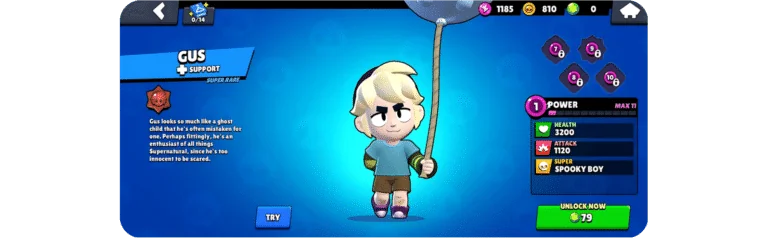
You’ve now got a build that’s grounded in live tracker data rather than a fixed rule: Kooky Popper and Spirit Animal by default, Health Bonanza when you’re holding a zone instead of bursting a fight, and Damage plus Shield gears in almost every case.
Pair the right gadget, Star Power, and gears with smart map awareness, teammate synergy, and proactive Super usage, and you’ll get the most out of him as a support brawler. Don’t underestimate the spirit bar mechanic; it’s what separates average Gus players from great ones. Stick to his best modes, build him with the current numbers rather than an outdated guide, and he’ll consistently pull weight in your matches.
Frequently Asked Questions

How Many Super Rare Gears Can Gus Unlock in Total?
Gus can unlock 6 Super Rare Gears in total, the same slot count every brawler in the game has. They’re purchased with in-game Coins once unlocked.
Does Spirit Animal Boost Gus Himself or Only a Teammate?
It applies to whoever receives Gus’s Super, which can be Gus himself if he shields himself or a teammate if he shields them. Either way, the 25% damage boost lasts 5 seconds from the moment the shield is granted.
How Many Live Builds Back Up Gus’s Current Recommended Loadout?
As of a September 2026 snapshot, 178 user-submitted builds tracked on noff.gg consistently favor Kooky Popper and Spirit Animal as the dominant gadget and Star Power choices, with Damage and Shield leading the Gear picks.
How Much Damage Does Kooky Popper Deal When Triggered?
Live build trackers currently list Kooky Popper’s burst at 2,160 damage per spirit, though this figure has changed across past balance patches, so treat it as accurate as of this writing rather than fixed permanently.
How Long Does Shield Gear Take to Regenerate at Full Health?
At full health, Shield Gear begins regenerating after 10 seconds out of combat. The regeneration rate itself can vary slightly depending on Gear upgrade level, so treat the 10-second trigger as the reliable part and the fill speed as approximate.
