

Brawl Stars Age Rating: Is It Safe for Kids and What Parents Should Know
Brawl Stars carries a 13+ age rating on the App Store, and that number now matches Supercell’s own Terms of Service, which also sets the minimum account age at 13. That’s a change worth flagging if you’ve seen older parenting guides quote a 9+ rating: Apple overhauled its age-rating bands in 2025, and Brawl Stars moved up under the new system.
The game still features cartoonish violence, open chat, and in-app purchases that reach $99.99 for the largest gem pack. Younger kids remain vulnerable to addictive reward loops, impulsive spending, and contact from strangers, even with the higher rating in place. It’s safer than many competitive online games, but it’s not without real risks, and there’s a lot more you’ll want to know before deciding.
Key Takeaways
Short version: Brawl Stars’ official ratings finally agree with each other on iOS, but the real risk in this game was never really about the cartoon violence.
- Apple reclassified Brawl Stars from 9+ to 13+ in 2025, closing the long-standing gap with Supercell’s own 13+ Terms of Service. Google Play still lists it as Everyone 10+ in most regions (USK 12+ in Germany), because Android ratings come from a separate ratings body.
- The chat and club system, not the combat, is the risk parents ask about most. Predators can operate inside clubs and text chat without any identity verification in place.
- Gem packs run from $1.99 to $99.99, and the randomized “Brawl Box” reward mechanic resembles a loot box, which is why several child-safety advocates flag it alongside gambling-adjacent game mechanics.
What Is the Official Brawl Stars Age Rating?
Brawl Stars’ official age rating depends on where you check, and the numbers shifted enough over the past year that a lot of parenting guides about this game are now out of date.
| Platform | Rating | Source |
|---|---|---|
| Apple App Store (US) | 13+ | App Store listing |
| Google Play (US) | Everyone 10+ (Fantasy Violence, Crude Humor) | Google Play listing |
| Google Play (Germany) | USK: Ages 12+ | Google Play DE listing |
| Supercell Terms of Service | 13+ minimum to create an account | Supercell ToS |
Apple replaced its old 4+/9+/12+/17+ rating bands with a new 4+/9+/13+/16+/18+ scale in 2025, and Brawl Stars was reclassified as 13+ under the new system, flagged for infrequent cartoon violence and messaging or chat features. That’s the first time Apple’s own storefront rating has actually matched what Supercell has required in its Terms of Service all along.
Google Play ratings still lag behind and vary by country, because they come from the International Age Rating Coalition (IARC), a separate ratings body that scores apps against a standardized content questionnaire rather than Apple’s own review process.
None of this changes the practical problem for parents: Brawl Stars doesn’t verify a player’s age beyond a self-reported birthdate entered during Supercell ID setup, so a 9 or 10-year-old can still create an account and start playing within minutes of downloading the app.
What we checked, and when: We pulled the current age rating directly from Apple’s App Store listing and Google Play’s US and German storefronts, and cross-referenced Supercell’s own Terms of Service page, on September 2, 2026. If you’ve read that Brawl Stars is rated 9+ on iOS, that’s the old figure; Apple’s listing has shown 13+ since the platform-wide ratings overhaul.
How Violent Is Brawl Stars for Kids?
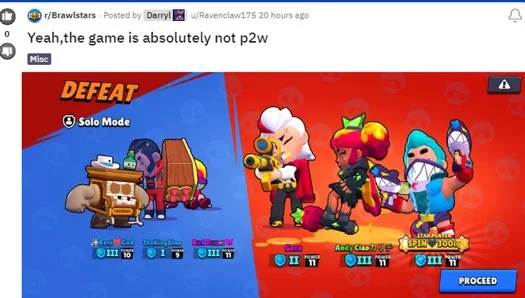
Once you know how Brawl Stars is officially rated, the next logical question is what your child actually encounters inside the game. The violence is entirely cartoonish. Characters grunt, crack one-liners, and play out exaggerated defeat animations rather than bleeding or showing realistic injury. Think everyday cartoon or anime-style action, not graphic content, which is consistent with why Apple’s listing flags only “infrequent” cartoon violence rather than anything more severe.
That said, combat is constant. Combat modes such as Showdown, Heist, and Smash & Grab all revolve around eliminating opponents, and your child will both defeat others and get defeated repeatedly, often within a three-minute match. There’s no gore, but the competitive nature carries its own emotional weight. Younger or more sensitive kids often struggle with repeated losses, teammate ridicule in club chat, and the general frustration of a results-driven game.
Research on cartoon-style game violence generally doesn’t show a strong link to real-world aggression, but competition itself is a different variable, and it’s the one worth watching in this specific game. If your child handles competitive losses poorly in other contexts, sports, board games, or schoolwork, that pattern is more predictive of how they’ll react to Brawl Stars than the cartoon violence is. Team-based modes can also build cooperation and resilience in children who play in a structured, time-limited way rather than in open-ended sessions.
Can Predators Reach Your Child Through Brawl Stars Chat?
Brawl Stars’ chat features can expose your child to adults who use text conversations to build trust and extract personal information over time. The game includes automated chat filters, reporting tools, and its 13+ age gate, but none of these confirm a player’s actual age or identity, so a determined bad actor can still make contact, especially by steering conversations toward external platforms like Discord.
You can reduce the risk by monitoring your child’s club memberships, teaching them to block and report suspicious users, and turning off chat features through parental controls when needed. Brawl Stars comes from Supercell, the same developer behind Clash of Clans and Clash Royale, so it shares that same broad, cross-generational player base, which is exactly why age-mixing inside clubs is a real concern rather than a hypothetical one.
Chat Predator Risks
Brawl Stars has no voice chat and no photo sharing, but its text-based chat system still opens the door to risks your child may not recognize as risks. Predators pose as fellow kids inside group chats and clubs, gradually building rapport before requesting personal information or asking to continue the conversation elsewhere. Because the game requires no identity verification, your child has no reliable way to tell a genuine peer from someone with harmful intentions.
Clubs function like open chat rooms: predators get anonymous access to your child without needing to hand over any personal details of their own. Once contact is made, conversations often move to external platforms like Discord, where Brawl Stars’ limited moderation no longer applies at all. Even the filtered in-game chat still exposes kids to profanity and strangers with bad intentions, which is why direct conversations about online stranger danger matter more here than the combat content ever would.
Blocking features exist, but they’re a weak deterrent on their own, since a blocked user can simply create a new account and re-establish contact. Supercell doesn’t offer a built-in setting to disable club chat outright, so the burden falls on device-level and account-level controls instead.
Protecting Your Child
Knowing these risks exist is only half of it; acting on them is what actually keeps your child safer. Start by talking openly about who they interact with in-game and why some conversations should raise a flag. Teach them to recognize grooming tactics, such as a “friend” who asks to move the conversation off-platform or who asks personal questions early on, and to report anything uncomfortable right away.
For younger or less mature kids, consider disabling club chat entirely and restricting interactions with random players. Parental control apps can layer screen time limits and app blocking on top of whatever Brawl Stars offers natively. If you spot inappropriate content, screenshot it before reporting it to both Supercell and, if warranted, local authorities.
Keep anonymity strict: no real names, schools, or locations in usernames or chats. Steer your child away from joining external Discord servers linked from in-game clubs, since that’s where most of the game’s built-in protections stop applying. With consistent oversight and clear boundaries, Brawl Stars becomes considerably safer without becoming off-limits.
Is Brawl Stars Safe for Kids Overall?
Brawl Stars is generally safe from a content standpoint. Its cartoonish violence, kid-friendly visuals, and absence of mature themes make the core gameplay appropriate for most children in the 10-and-up range.
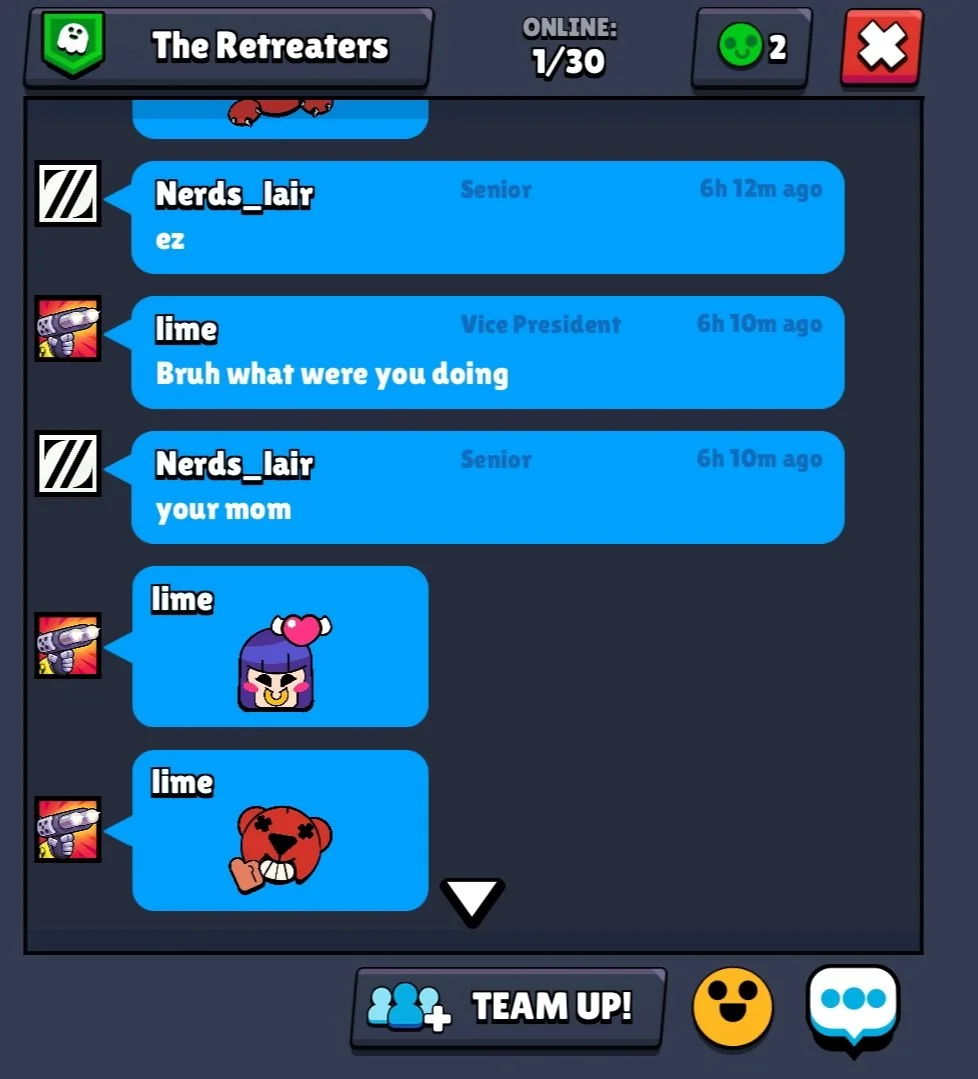
The in-game chat feature is where the real risk sits, since predators can use club conversations to target younger players with no identity check standing in their way. Supercell does apply automated chat filters tuned to a player’s stated age, which helps but doesn’t replace parental awareness.
Content Safety Assessment
Is Brawl Stars safe for kids? The short answer is yes, with the right parental involvement. The cartoonish visuals, kid-friendly character designs, and absence of graphic violence make the core content appropriate for most children. Injured characters respond with humorous catchphrases rather than realistic depictions of harm, which keeps the tone light even during constant combat.
The real risks aren’t about the violent content; they’re about behavior and habits. Competitive gameplay can trigger frustration and emotional outbursts, unlimited screen time opens the door to compulsive play patterns, and impulsive spending on in-app purchases creates a real financial exposure without supervision.
The good news: all three of those risks respond well to device-level parental controls, in-game safety settings, and consistent household rules around screen time and spending, covered in detail further down this page.
Chat Risks Exist
While the game’s core content is largely appropriate for younger players, the chat features introduce a separate layer of risk that deserves its own attention. Club chat rooms expose kids to bullying, offensive language, and the predatory contact described above. Children also risk sharing school names, locations, or other usernames that link back to their other social accounts.
| Risk Type | In-Game Threat | External Threat |
|---|---|---|
| Predatory Contact | Club chat exploitation | Discord grooming |
| Privacy Exposure | Username or location sharing | Social media linking |
| Harassment | Trolling, cyberbullying | Unmoderated group chats |
Monitor your child’s club activity closely. Off-platform communication on Discord removes Brawl Stars’ limited protections entirely, which increases exposure considerably compared to staying in-game.
Parental Oversight Matters
Parental oversight ultimately determines whether Brawl Stars is safe for your child. The game itself contains no mature themes, but behavioral risks like frustration and compulsive play can emerge without supervision. Here’s what that looks like in practice, by age band, used consistently through the rest of this guide:
- Under 10: strict, hands-on supervision. Co-play so you can see exactly what they’re exposed to, and treat any account creation as something you do together.
- 10 to 13: moderate limits. Monitor chat and purchases periodically, keep the conversation about online safety ongoing rather than a one-time talk.
- 14 and older: more independence, with occasional check-ins focused on screen time and spending rather than direct supervision of every match.
Your involvement, not your child’s exact age, is what makes the difference. A mature 9-year-old with an engaged parent will often handle Brawl Stars better than an unsupervised 13-year-old.
How Addictive Is Brawl Stars for Young Players?
Brawl Stars is built around design patterns that are common across free-to-play mobile games, and those patterns clearly work: the game has grown to nearly 50 million monthly active players in 2026. Those same patterns are specifically engineered to keep players coming back. Daily login rewards encourage players to open the app every 24 hours even if they don’t have time for a full session.
Progression timers extend engagement by making advancement partly dependent on waiting rather than skill. The “play again” prompt after every match removes any natural pause point, which is how a planned ten-minute session turns into an hour without anyone deciding that on purpose.
For children around 10 to 13, these mechanics carry more weight than they do for adults, because impulse control is still developing at that age, and reward-based loops are effective precisely because they don’t require much of it. On Common Sense Media, both parent and kid reviewers of Brawl Stars independently flag its addictive nature as a recurring theme, alongside pay-to-win pressure and matchmaking frustration, which lines up with what parents commonly report anecdotally rather than any single clinical statistic.
Watch for the practical warning signs: slipping grades, skipped meals or school, disrupted sleep, and withdrawal from family activities or other hobbies. If conversations revolve almost entirely around Brawl Stars and everything else has quietly dropped away, that combination is worth addressing directly rather than waiting to see if it resolves on its own.
Are In-Game Purchases a Risk for Kids in Brawl Stars?
Beyond addictive design, how Brawl Stars handles money is a real and separate risk category. Gem packs range from $1.99 for 30 gems up to $99.99 for the largest bundle, and the reward system is built to make spending feel worthwhile even when it isn’t.
The “Brawl Box” reward mechanic hands out randomized items in exchange for gems, which functions like a loot box: your child pays for a chance at something, not the specific thing they want, and that structure is a big part of why child-safety advocates group it with gambling-adjacent mechanics rather than a straightforward purchase. Inside clubs, social pressure adds another layer, since kids can feel pushed to spend gems just to keep pace with squadmates who already have upgraded Brawlers or exclusive skins.
Third-party sites that promise cheap gems are a separate scam vector on top of all this; several exist purely to steal Supercell ID login credentials, and none of them are affiliated with Supercell. If your child wants more gems without spending real money, point them toward Supercell’s own legitimate free-gem methods instead of a third-party site.
The game doesn’t require a payment method to play, and progression is fully possible without spending a cent, but limited-time offers and streak-based rewards are specifically timed to make spending feel urgent. Children generally can’t tell the difference between harmless fun and a real financial decision, which is exactly why setting clear purchase boundaries, ideally by removing stored payment methods from the device entirely, matters more than any in-game warning label.
What Age Should a Child Start Playing Brawl Stars?
Brawl Stars now carries a 13+ rating on the App Store, alongside Everyone 10+ on Google Play in most regions, and Supercell’s own Terms of Service also sets the minimum age at 13. Even with the ratings now largely agreeing, readiness depends less on the number itself and more on a child’s emotional resilience, impulse control, and ability to handle competitive losses without spiraling.
Using the age bands from earlier in this guide: under 10 needs hands-on supervision, 10 to 13 needs firm limits and regular check-ins, and 14 and older can usually handle more independence with lighter monitoring.
Official Age Rating Breakdown
The table earlier in this guide covers the platform ratings directly. What’s worth adding here is how those numbers get used in practice by third-party reviewers parents actually search for: Common Sense Media’s own parent reviewers rate Brawl Stars appropriate from around age 9, while Bark’s app safety guide lists the App Store rating at Everyone 10+ under its own review, showing that even experienced reviewers land in different places depending on which storefront and which year they checked. That spread is a good reminder that a single rating number was never going to settle this on its own; it’s a starting point, not the final word.
Maturity Level Considerations
Official ratings give you a starting point, but your child’s maturity level matters more than any number on a label. Brawl Stars rewards fast decision-making and basic team communication, skills that most kids develop meaningfully somewhere around age 10, though that varies a lot by child.
Younger children tend to struggle most with competitive pressure, since ranked play tracks real gains and losses after every match, and a losing streak can hit an emotionally immature player hard. Online chat, separately, exposes any age group to strangers who may not have good intentions.
For club-level or ranked play specifically, kids need several fully upgraded Brawlers and enough game knowledge to follow tournament-style formats, which demands more sustained focus than casual solo matches. Assess emotional resilience, impulse control, and how your child handles both winning and losing before deciding they’re ready for that level of play.
Parental Guidance By Age
No single age perfectly suits every player, since kids mature at different rates, but the three age bands used throughout this guide give you a workable starting point: strict, hands-on supervision under 10; moderate limits with regular chat and purchase checks from 10 to 13; and lighter, spending- and screen-time-focused monitoring from 14 up.
Regardless of age, keep Brawl Stars’ built-in reporting and blocking features turned on, and hold the line on playtime consistently, since preteens are the group most vulnerable to the addictive reward loops covered earlier in this guide.
Is Brawl Stars OK for a 9 or 10-Year-Old?
This is one of the most specific questions parents actually search for, so here’s a direct answer: yes, a 9 or 10-year-old can technically play Brawl Stars, since Google Play still lists it as Everyone 10+ in most regions and there’s no hard age lock at download time. But Supercell’s own Terms of Service set the account minimum at 13, and Apple’s own App Store listing has moved up to 13+ as well. In practice, that gap means a 9 or 10-year-old can access the app easily, but they shouldn’t be doing it unsupervised.
For a 9-year-old specifically, direct co-play is the realistic bar, not passive monitoring from another room. Sit with them for the first several sessions, walk through the club chat settings together, and treat account setup itself as something you do together rather than something they do alone. For a 10-year-old, you can loosen that slightly and move toward the “10 to 13” band covered earlier in this guide: moderate limits, periodic chat and purchase checks, and an ongoing conversation about stranger contact rather than a single supervised session.
Neither age is automatically safe just because the content is mild. The combat itself, cartoonish and non-graphic, is genuinely fine for most 9 and 10-year-olds. What actually determines whether the game is a good fit at that age is the chat system and the spending mechanics, both of which are things you control directly through the parental controls covered later in this guide.
Check These Things Before Letting Your Kid Download Brawl Stars
Before downloading Brawl Stars for your child, walk through a few practical checks that go beyond the official age ratings covered above.
First, check whether your child can handle competitive frustration in general. Brawl Stars is fast-paced and emotionally intense in short bursts, so kids who already struggle with losing in other games or sports are likely to struggle here too.
Next, review the chat features directly rather than taking Supercell’s filters on faith. The filters catch a lot, but profanity and predatory phrasing both still slip through, and club chats are the highest-risk surface in the whole game.
Also look closely at in-app purchases. Since the game actively encourages spending through timed offers, disabling purchases through your device’s parental controls, not just the game’s own settings, is the more reliable safeguard.
Weigh your child’s maturity level over their age on the calendar. A 10-year-old who still needs supervision for random online interactions is a genuinely different case than a 14-year-old who’s already shown good judgment online.
Finally, set screen time limits before the first download, not after a habit has already formed. Brawl Stars’ daily login rewards and progression timers are specifically built to fill however much time you give it.
How to Set Up Parental Controls for Brawl Stars
Setting up parental controls for Brawl Stars works best as two layers stacked together: restrictions inside the game itself, reinforced by restrictions at the device level, since neither layer alone catches everything.
Start inside the game. Open the Supercell ID settings through the burger menu, turn on account protection, and make sure your child’s actual age is entered accurately, since age-appropriate chat restrictions apply automatically based on that number.
Verify your child’s age in Supercell ID settings first. It’s a two-minute step, and it’s the one setting that automatically tightens chat restrictions without you having to configure anything else.
Then handle the device and third-party layer, which is where most of the actual enforcement happens:
- Disable in-app purchases through your phone’s native settings, or through a third-party tool like Qustodio, to prevent accidental or impulsive spending.
- Set daily time limits using Screen Time on iOS or Digital Wellbeing on Android. There’s no single “correct” number, but many pediatric guidelines point toward capping recreational screen time at around two hours a day for school-age kids as a reasonable starting point, not a Brawl Stars-specific rule.
- Schedule downtime starting at least an hour before bed, since late-night sessions are where sleep disruption tends to show up first.
- If your child isn’t ready for unsupervised play at all, use a tool like Qustodio to block the app outright rather than relying on partial restrictions.
If your child’s account age was entered incorrectly, contact Supercell support directly to correct it. Fixing that one field can change which chat restrictions apply automatically.
Warning Signs Your Child Is Addicted to Brawl Stars
Brawl Stars is genuinely fun, so how do you tell when your child has crossed from normal enjoyment into something that needs intervention? Watch for explosive reactions when you ask them to stop playing, or irritability and mood swings that show up outside gaming sessions too. Lying about how long they’ve played, or repeatedly failing to cut back despite saying they will, is a more serious flag than any single outburst.
Check daily functioning as well. Slipping grades, neglected homework, skipped meals, and poor hygiene all suggest gaming is displacing real responsibilities rather than fitting around them. Pulling away from friends and family in favor of online teammates is another pattern worth noticing early.
Physically, look for disrupted sleep, eye strain, general fatigue, or complaints of stomachaches specifically when the game is taken away. None of these are proof on their own, but if several show up together and persist, that combination is a stronger signal than any one of them alone, and it’s worth treating as a reason for a more structured conversation or outside support rather than just tighter screen time rules.
Brawl Stars Parent Review: Our Bottom-Line Verdict
If you just want the short version after reading all of this: Brawl Stars earns a cautious yes from most parents who actually sit down and play it alongside their kids first. The combat is cartoonish and non-graphic, matches are short, and the core gameplay rewards teamwork and quick thinking more than anything objectionable. The two things that actually determine whether it’s a good fit for your child are the unverified chat system and the spending mechanics, neither of which shows up in the official age rating at all.
It’s a good fit if: your child is 10 or older, you’re willing to check in on club chat periodically, and you’ve disabled in-app purchases at the device level rather than trusting the game’s own settings.
Think twice, or wait, if: your child struggles with losing in other competitive settings, you don’t have time to co-play the first few sessions, or you’re not prepared to have a direct conversation about online strangers before handing over the device.
For more on specific Brawlers, competitive strategy, and everything else Brawl Stars, browse our full library of Brawl Stars guides.
Conclusion
You’ve now got what you need to decide whether Brawl Stars is right for your child. It’s a fun game, and its official ratings have actually gotten more honest over the past year, but it still comes with real risks around spending, screen time, and unverified contact through chat. Set up parental controls on both the game and device level, keep the conversation about online safety ongoing rather than a one-time talk, and watch for the warning signs of compulsive play covered above. You know your child’s maturity better than any rating label does, so use these numbers as a starting point, not a substitute for staying involved.
Frequently Asked Questions
Can My Child Play Brawl Stars Offline Without Accessing Chat Features?
No. Brawl Stars requires an internet connection for all gameplay, so there’s no offline mode. Without connectivity there’s also no chat access, which does eliminate the chat-related risks entirely, but it also means the game simply won’t launch without a connection.
Does Brawl Stars Require a Linked Social Media Account to Play?
No. You create a Supercell ID using just an email address, so the game is fully playable without connecting any social media profile.
How Does Brawl Stars Compare to Similar Games Like Fortnite for Kids?
Brawl Stars is generally considered the milder option for younger kids. It’s mobile-first with cartoonish, non-graphic violence and shorter matches, which suits supervised play from around age 10 up for many families. Fortnite has a larger, more mixed-age player base and a similar addiction profile, and tends to be a better fit once a child is closer to 13 and has shown good judgment with online interactions.
Can Parents Create Separate Child Accounts With Restricted Permissions in Brawl Stars?
No. Brawl Stars doesn’t offer built-in parental account linking or a separate child-account mode. You’ll need device-level parental controls or a third-party app to manage what your child can access.
Does Supercell Notify Parents When Children Make In-Game Purchases?
Not directly. Supercell doesn’t send you a purchase alert itself; instead, Apple or Google sends an automatic receipt by email after each transaction. If you want real-time alerts rather than after-the-fact receipts, that means setting up device-level parental controls separately.
